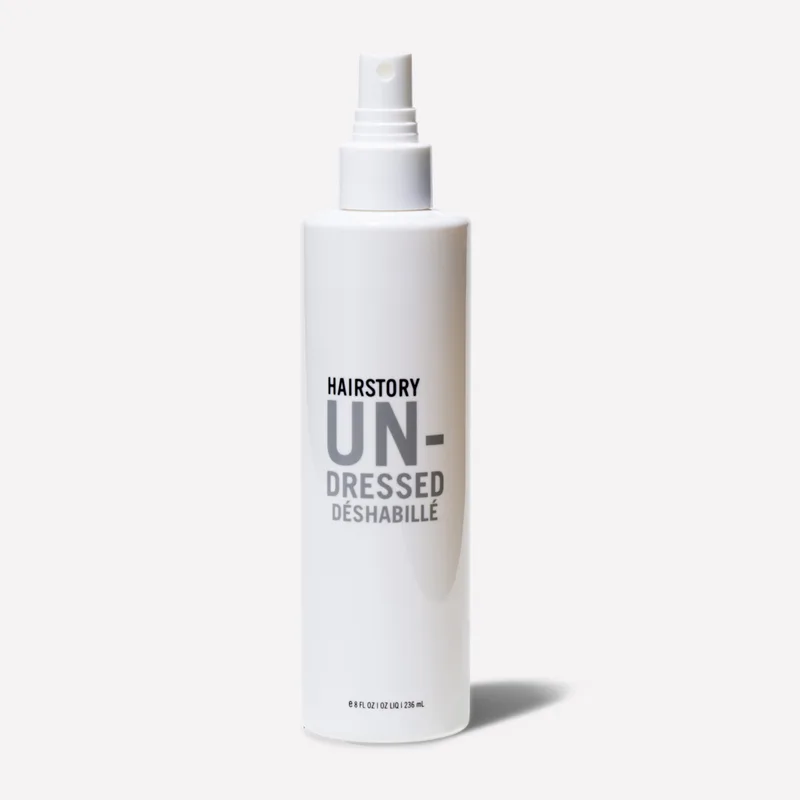
Hairstory
Undressed
Hair Spraytypically $30–70

Cleaner pick · Safest styling we have rated
Catrice Cosmetics
Curl Freeze Lash Styling Gel+51 on ingredient safety
$7
Ingredient safetyRaters agree
Ranked by safety only. Greenlens earns from qualifying purchases. Payout never affects a rating, a ranking, or the cleaner pick.
Raters split
Ingredient safety
A 42-point gap between the two loudest voices.
40ANSES Endocrine DisruptorsGovernment
vs82IARC MonographsGovernment
050100
See why, ingredient by ingredientAll 3069 cleaner options, safest first We show the best 12, including the strongest on each axis.
Every rater, every axis
Ingredient safety
42 pts apartIndependent — not funded by the brands it rates. Auto-linked to this product, not yet human-reviewed. Checked this week. about this rater →
Independent — not funded by the brands it rates. Auto-linked to this product, not yet human-reviewed. Checked this week. about this rater →
A government authority. Auto-linked to this product, not yet human-reviewed. Checked this week. about this rater →
A government authority. Auto-linked to this product, not yet human-reviewed. Checked this week. about this rater →
Independent — not funded by the brands it rates. Auto-linked to this product, not yet human-reviewed. Checked this week. about this rater →
A government authority. Auto-linked to this product, not yet human-reviewed. Checked this week. about this rater →
Also screened, nothing found: ECHA SVHC Candidate List · California Proposition 65 · US NTP Report on Carcinogens · Health Canada Ingredient Hotlist
Environmental
Also screened, nothing found: EU Microplastics Restriction
Labor
raters agreeRun by a nonprofit. Auto-linked to this product, not yet human-reviewed. Checked this week. about this rater →
Run by a nonprofit. Auto-linked to this product, not yet human-reviewed. This rates Hairstory as a company and applies to everything they make, not this product alone. Checked this week. about this rater →
Coverage & match quality
8 ratings · 2 of 4 axes
- Some ratings rest on an automatic match that has not been human-reviewed.
- Fewer raters reach smaller-brand products, so a missing rating is not a clean bill of health, only a gap.
Weighted by what you care about
Tune your weights
composite recomputes live
+
1.0×
Environmentalno rating
No rater covers this axis for this product, so its weight can't move the score.
1.0×
Packagingno rating
No rater covers this axis for this product, so its weight can't move the score.
0 means ignored. Higher = more weight in your composite.
Ingredients, decoded
Data availability
Robust40 of 41 characterized
Our sources have reference data on 40 of 41 listed ingredients; 1 is uncharacterized in our data — a gap, not a clean bill.
Worth a look (14)
ANSES endocrine candidateflagged by 3 of 9 lists →
EU harmonised skin sensitizerflagged by 2 of 9 lists →
Undisclosed fragrance blendflagged by 2 of 9 lists →
ANSES endocrine candidateflagged by 2 of 9 lists →
ANSES endocrine candidateflagged by 2 of 9 lists →
EU harmonised skin sensitizerflagged by 2 of 9 lists →
EU harmonised skin sensitizerflagged by 2 of 9 lists →
IARC possible carcinogen (Group 2B)flagged by 1 of 9 lists →
EU-restricted (with limits)flagged by 2 of 9 lists →
EU-restricted (with limits)flagged by 2 of 9 lists →
Mild sensitizer for someflagged by 1 of 9 lists →
EU-restricted (with limits)flagged by 2 of 9 lists →
EU-regulated fragrance allergenflagged by 1 of 9 lists →
EU-regulated fragrance allergenflagged by 1 of 9 lists →
No flags in our sources (26)
- Water
- SD Alcohol 40-Bcommonly drying
- Polysorbate 20
- Glycerinhumectant
- Polyquaternium-11
- Polyquaternium-16
- Heptyl Undecylenate
- Rosa Canina Fruit Extract
- Camellia Sinensis Leaf Extract
- Acacia Senegal Gumfragrance material
- Xylitol
- Coconut Alkanes
- Coco-Caprylate/Caprate
- Hydrolyzed Quinoa
- Triticum Vulgare Starch
- Galactoarabinan
- Sodium Hyaluronatehumectant
- Hydrolyzed Silk
- Tocopheryl Acetate
- VP/VA Copolymer
- Potassium Sorbate
- Sodium Benzoate
- Isopropyl Alcoholcommonly drying
- Laurtrimonium Chloride
- Lavandula Angustifolia Oilfragrance material
- Boswellia Carterii Oil
No data in our sources (1)
Not a verdict — our authorities simply have no reference for these.
What these ingredient tags mean (3)
These describe what an ingredient is, not whether it is a problem. The stance marks above are the ratings; these are not.
commonly dryingSD Alcohol 40-B, Isopropyl Alcohol
- SD Alcohol 40-B: Denatured ethanol: a fast-evaporating solvent that thins a formula and leaves a dry finish. International Chemical Safety Card ICSC 0044, Ethanol (anhydrous), prepared by an international group of experts for the ILO and WHO: "The substance defats the skin, which may cause dryness or cracking." WHO Guidelines on Hand Hygiene in Health Care (2009) records depletion of the skin lipid barrier by lipid-dissolving alcohols, and also that "the lipid-dissolving effect of alcohols is inversely related to their concentration". Both describe stronger exposures than a cosmetic formula.
- Isopropyl Alcohol: A fast-evaporating solvent with a drying finish, common in toners and hand products. International Chemical Safety Card ICSC 0554, Isopropyl alcohol, prepared by an international group of experts for the ILO and WHO: "Repeated or prolonged contact with skin may cause dryness and cracking." It describes a stronger exposure than a cosmetic formula.
fragrance materialBenzyl Alcohol, Lavandula Angustifolia Oil, Benzyl Benzoate, Citronellol, Limonene, Geraniol, Linalool
- Benzyl Alcohol: Used both as a fragrance component and as a preservative; the EU names it either way. EU Regulation (EC) 1223/2009, Annex III entry 45: a fragrance substance whose presence must be indicated in the list of ingredients above 0,001% in leave-on and 0,01% in rinse-off products, because of established contact-allergy risk. That entry carries transition footnote (38), which is footnote (37) plus a condition: stock that does not comply may still be made available until 31 July 2028 only "provided that they comply with the restrictions applicable on 15 August 2023", and only if it was lawfully placed on the Union market before the 31 July 2026 cut-off. Entry 45 covers its non-preservative use; it is separately an allowed preservative at Annex V entry 34.
- Lavandula Angustifolia Oil: An essential oil the EU names on its own account as a fragrance substance to be declared on the label, under a shared name covering several lavender species. EU Regulation (EC) 1223/2009, Annex III entry 360, inserted by Commission Regulation (EU) 2023/1545: a fragrance substance whose presence must be indicated in the list of ingredients above 0,001% in leave-on and 0,01% in rinse-off products. It is declarable in its OWN right, not by way of any component it carries. The entry is a GROUPED one covering the oils and extracts of Lavandula angustifolia, Lavandula intermedia and Lavandula hybrida, about eight glossary names in all, all declared under the single common name "Lavandula Oil/ Extract", so that name on a label does not identify which of them is present. The duty applies now. Transition footnote (40) lets stock that does not comply, lawfully placed on the Union market before the 31 July 2026 cut-off, be made available until 31 July 2028.
- Benzyl Benzoate: A balsamic fragrance component named separately on the label. EU Regulation (EC) 1223/2009, Annex III entry 85: a fragrance substance whose presence must be indicated in the list of ingredients above 0,001% in leave-on and 0,01% in rinse-off products, because of established contact-allergy risk.
- Citronellol: A rose-and-citrus fragrance component named separately on the label. EU Regulation (EC) 1223/2009, Annex III entry 86: a fragrance substance whose presence must be indicated in the list of ingredients above 0,001% in leave-on and 0,01% in rinse-off products, because of established contact-allergy risk.
- Limonene: A citrus-smelling fragrance component named separately on the label; the one name covers three related isomers. EU Regulation (EC) 1223/2009, Annex III entry 88: a fragrance substance whose presence must be indicated in the list of ingredients above 0,001% in leave-on and 0,01% in rinse-off products, because of established contact-allergy risk. That entry carries transition footnote (37): stock that does not comply, lawfully placed on the Union market before the 31 July 2026 cut-off, may still be made available until 31 July 2028. It is marked on the racemic dl-limonene/Dipentene line and the (S)-(l-limonene) line, but NOT the (R)-p-mentha-1,8-diene (d-limonene) line, CAS 5989-27-5, whose duty was already running as entry 88 before Commission Regulation (EU) 2023/1545 and so needed no transition. All three isomers are declared under the single glossary name "Limonene", so that name on a label does not identify which of them is present.
- Geraniol: A rose-scented fragrance component named separately on the label. EU Regulation (EC) 1223/2009, Annex III entry 78: a fragrance substance whose presence must be indicated in the list of ingredients above 0,001% in leave-on and 0,01% in rinse-off products, because of established contact-allergy risk.
- Linalool: A floral fragrance component named separately on the label. EU Regulation (EC) 1223/2009, Annex III entry 84: a fragrance substance whose presence must be indicated in the list of ingredients above 0,001% in leave-on and 0,01% in rinse-off products, because of established contact-allergy risk.
humectantGlycerin, Sodium Hyaluronate
- Glycerin: A humectant, and one of the two ingredients a comparison of moisturiser components found made a significant difference to skin hydration. FDA OTC skin protectant monograph, 21 CFR 347.10(h), lists glycerin as a skin protectant at 20 to 45%. On the humectant half: Jeong CB, Han JY, Cho JC, Suh KD, Nam GW, "Analysis of electrical property changes of skin by oil-in-water emulsion components", Int J Cosmet Sci 2013;35(4):402-410, DOI 10.1111/ics.12059, PMID 23621673, found that "glycerine and urea showed significant skin hydration effects compared with other humectants".
- Sodium Hyaluronate: A humectant that holds a large amount of water at the skin surface. Chylińska N, Maciejczyk M, "Hyaluronic Acid and Skin: Its Role in Aging and Wound-Healing Processes", Gels 2025;11(4):281, DOI 10.3390/gels11040281, PMID 40277717, open access: hyaluronic acid's "high osmotic activity and anionic structure enable it to bind large amounts of water", and "sodium and potassium hyaluronate are widely used in moisturizing products". The same review notes that high-molecular-weight hyaluronic acid does not penetrate the deeper layers.
Where this came from
Cruelty-free status recorded from leapingbunny.org ↗
Researched facts on Greenlens always carry the page that stated them — nothing is inferred from a model's memory.