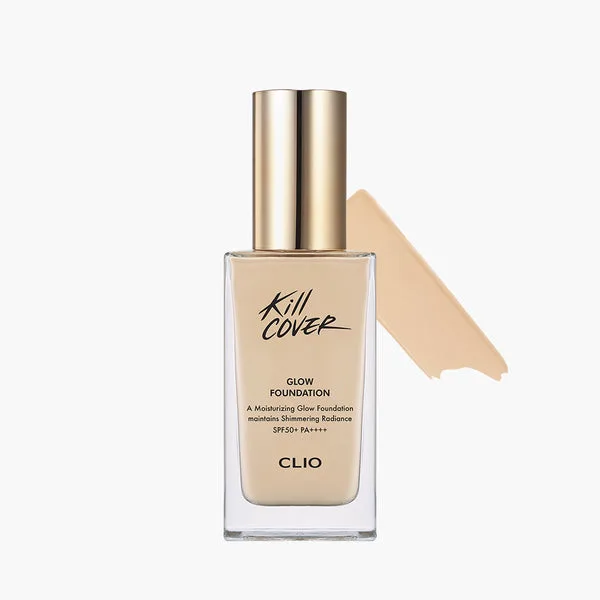
Clio
Kill Cover Glow Foundation, 4 Ginger
uncategorized

Cleaner pick · Safest face we have rated
Tarte
maracuja juicy blush & bronzer multi-stick+46 on ingredient safety
$38
Ingredient safetyRaters agree
Ranked by safety only. Greenlens earns from qualifying purchases. Payout never affects a rating, a ranking, or the cleaner pick.
Raters split
Ingredient safety
A 52-point gap between the two loudest voices.
42Greenlens Precautionary ScreenIndependent
vs94Greenlens Tolerance ScreenIndependent
050100
See why, ingredient by ingredientAll 14812 cleaner options, safest first We show the best 12, including the strongest on each axis.
Every rater, every axis
Ingredient safety
52 pts apartIndependent — not funded by the brands it rates. Auto-linked to this product, not yet human-reviewed. Checked this week. about this rater →
A government authority. Auto-linked to this product, not yet human-reviewed. Checked this week. about this rater →
Independent — not funded by the brands it rates. Auto-linked to this product, not yet human-reviewed. Checked this week. about this rater →
A government authority. Auto-linked to this product, not yet human-reviewed. Checked this week. about this rater →
Independent — not funded by the brands it rates. Auto-linked to this product, not yet human-reviewed. Checked this week. about this rater →
Also screened, nothing found: US NTP Report on Carcinogens · Health Canada Ingredient Hotlist · California Proposition 65 · EU Harmonised Classification (CLP Annex VI) · ECHA SVHC Candidate List
Environmental
Also screened, nothing found: EU Microplastics Restriction
Coverage & match quality
5 ratings · 1 of 4 axes
- Some ratings rest on an automatic match that has not been human-reviewed.
- Fewer raters reach smaller-brand products, so a missing rating is not a clean bill of health, only a gap.
Weighted by what you care about
Tune your weights
composite recomputes live
+
1.0×
Environmentalno rating
No rater covers this axis for this product, so its weight can't move the score.
Laborno rating
No rater covers this axis for this product, so its weight can't move the score.
Packagingno rating
No rater covers this axis for this product, so its weight can't move the score.
0 means ignored. Higher = more weight in your composite.
Ingredients, decoded
Data availability
Robust49 of 50 characterized
Our sources have reference data on 49 of 50 listed ingredients; 1 is uncharacterized in our data — a gap, not a clean bill.
Worth a look (4)
ANSES CMR-listedflagged by 5 of 9 lists →
Endocrine-activeflagged by 2 of 9 lists →
Strong contact sensitizerflagged by 1 of 9 lists →
Undisclosed fragrance blendflagged by 2 of 9 lists →
No flags in our sources (45)
- Water
- Cetyl Ethylhexanoate
- Propylene Glycol Dibenzoate
- C13-15 Alkane
- Ethylhexyl Salicylate
- Polyglyceryl-6 Polyhydroxystearate
- Glycerinhumectant
- Magnesium Sulfate
- Niacinamidesoothing
- Butylene Glycol
- Zinc Oxidesoothing
- Polyglyceryl-6 Polyricinoleate
- Quaternium-18 Bentonite
- Bis-Diglyceryl Polyacyladipate-2
- Dimethiconerich occlusive
- Trimethylsiloxysilicate
- Caprylic/Capric Glycerides
- Isododecane
- Iron Oxides
- Boron Nitride
- Polypropylsilsesquioxane
- Acrylates/Polytrimethylsiloxymethacrylate Copolymer
- Caprylyl Methicone
- Palmitic Acid
- Aluminum Hydroxide
- Stearic Acid
- Triethoxycaprylylsilane
- Adenosine
- Myristic Acid
- Hydrolyzed Hyaluronic Acidhumectant
- Helianthus Annuus Seed Oil
- Amethyst Powder
- Tourmaline
- Nephrite Powder
- Olea Europaea Fruit Oil
- Coral Powder
- Ruby Powder
- Amber Powder
- Lupinus Albus Seed Extract
- Hydrogenated Lecithin
- Ceramide NPbarrier lipid
- Ceramide NS
- Ceramide APbarrier lipid
- Ceramide EOPbarrier lipid
- Tocopherol
No data in our sources (1)
Not a verdict — our authorities simply have no reference for these.
What these ingredient tags mean (5)
These describe what an ingredient is, not whether it is a problem. The stance marks above are the ratings; these are not.
undeclared fragrance blendParfum
- Parfum: A blend the label does not itemize, so what is in it cannot be read from the ingredient list. EU Regulation (EC) 1223/2009 permits the collective term "parfum"; the SCCS Opinion on Fragrance Allergens (SCCS/1459/11) reviews the contact-allergy evidence for the substances it can contain.
rich occlusiveDimethicone
- Dimethicone: A silicone that forms a film on the surface of the skin without an oily feel. FDA OTC skin protectant monograph, 21 CFR 347.10(g), lists dimethicone as a skin protectant at 1 to 30%.
humectantGlycerin, Hydrolyzed Hyaluronic Acid
- Glycerin: A humectant, and one of the two ingredients a comparison of moisturiser components found made a significant difference to skin hydration. FDA OTC skin protectant monograph, 21 CFR 347.10(h), lists glycerin as a skin protectant at 20 to 45%. On the humectant half: Jeong CB, Han JY, Cho JC, Suh KD, Nam GW, "Analysis of electrical property changes of skin by oil-in-water emulsion components", Int J Cosmet Sci 2013;35(4):402-410, DOI 10.1111/ics.12059, PMID 23621673, found that "glycerine and urea showed significant skin hydration effects compared with other humectants".
- Hydrolyzed Hyaluronic Acid: A humectant that holds a large amount of water at the skin surface. Chylińska N, Maciejczyk M, "Hyaluronic Acid and Skin: Its Role in Aging and Wound-Healing Processes", Gels 2025;11(4):281, DOI 10.3390/gels11040281, PMID 40277717, open access: hyaluronic acid's "high osmotic activity and anionic structure enable it to bind large amounts of water", and "sodium and potassium hyaluronate are widely used in moisturizing products". The same review notes that high-molecular-weight hyaluronic acid does not penetrate the deeper layers.
barrier lipidCeramide NP
- Ceramide NP: One of the lipid families the skin barrier is actually built from. Feingold KR and Elias PM, "The role of ceramides in the disruption of the cutaneous permeability barrier, a common manifestation of skin disorders", J Lipid Res 2024;65(8):100593, DOI 10.1016/j.jlr.2024.100593, open access: the barrier lipid matrix "by weight is approximately 50% ceramides, 25% cholesterol, and 15% free fatty acids".
soothingNiacinamide, Zinc Oxide
- Niacinamide: A vitamin B3 form that supports the skin barrier and has anti-inflammatory activity; it turns up in products aimed at acne, rosacea and eczema. Camillo L, Zavattaro E, Savoia P, "Nicotinamide: A Multifaceted Molecule in Skin Health and Beyond", Medicina (Kaunas) 2025;61(2):254, DOI 10.3390/medicina61020254, PMID 40005371, open access: it "is extensively used in ... the treatment of dermatological conditions such as blistering diseases, atopic dermatitis, rosacea, and acne vulgaris", and contributes to reducing inflammation. On the acne evidence specifically: Liu H, Yu H, Xia J, Liu L, Liu GJ, Sang H, Peinemann F, "Topical azelaic acid, salicylic acid, nicotinamide, sulphur, zinc and fruit acid (alpha-hydroxy acid) for acne", Cochrane Database Syst Rev 2020;5:CD011368, DOI 10.1002/14651858.CD011368.pub2, PMID 32356369, records "low-quality evidence" for every nicotinamide comparison it could pool, and none of its four nicotinamide studies measured the physician global assessment at all.
- Zinc Oxide: A mineral UV filter that the FDA also recognises as a skin protectant. FDA OTC skin protectant monograph, 21 CFR 347.10(u), lists zinc oxide as a skin-protectant active at 1 to 25%. Its labelled indication is 21 CFR 347.50(b)(3), "dries the oozing and weeping of poison: ivy, oak, sumac". The monograph does not give it the "minor skin irritation and itching" wording.