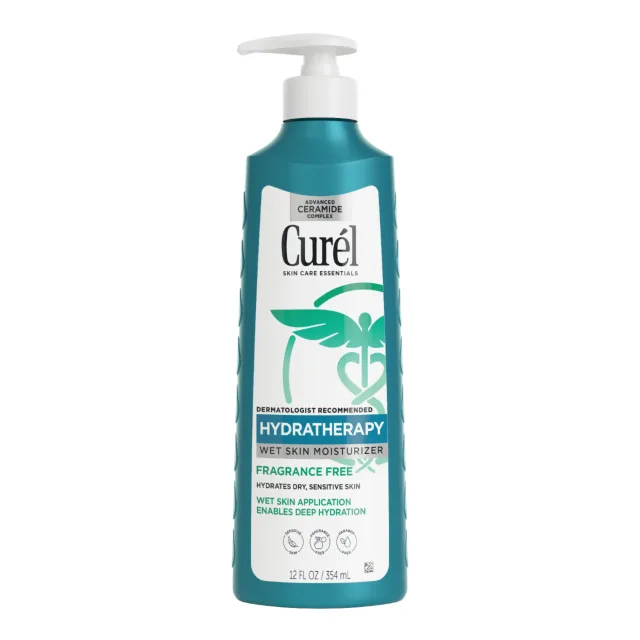
Curèl
hydra Therapy Wet Skin
uncategorized
Raters split
Ingredient safety
A 30-point gap between the two loudest voices.
70Greenlens Ingredient ScanIndependent
vs100Greenlens Precautionary ScreenIndependent
050100
See why, ingredient by ingredientEvery rater, every axis
Ingredient safety
30 pts apartIndependent — not funded by the brands it rates. Auto-linked to this product, not yet human-reviewed. Checked this week. about this rater →
A government authority. Auto-linked to this product, not yet human-reviewed. Checked this week. about this rater →
Independent — not funded by the brands it rates. Auto-linked to this product, not yet human-reviewed. Checked this week. about this rater →
Independent — not funded by the brands it rates. Auto-linked to this product, not yet human-reviewed. Checked this week. about this rater →
Also screened, nothing found: US NTP Report on Carcinogens · ANSES Endocrine Disruptors · California Proposition 65 · EU Harmonised Classification (CLP Annex VI) · IARC Monographs · ECHA SVHC Candidate List
Environmental
Also screened, nothing found: EU Microplastics Restriction
Labor
Run by a nonprofit. Auto-linked to this product, not yet human-reviewed. This rates Curèl as a company and applies to everything they make, not this product alone. Checked this week. about this rater →
Coverage & match quality
5 ratings · 2 of 4 axes
- Some ratings rest on an automatic match that has not been human-reviewed.
- Fewer raters reach smaller-brand products, so a missing rating is not a clean bill of health, only a gap.
Weighted by what you care about
Tune your weights
composite recomputes live
+
1.0×
Environmentalno rating
No rater covers this axis for this product, so its weight can't move the score.
1.0×
Packagingno rating
No rater covers this axis for this product, so its weight can't move the score.
0 means ignored. Higher = more weight in your composite.
Ingredients, decoded
Data availability
Robust33 of 35 characterized
Our sources have reference data on 33 of 35 listed ingredients; 2 are uncharacterized in our data — a gap, not a clean bill.
Worth a look (4)
EU-restricted (with limits)flagged by 2 of 9 lists →
EU-restricted (with limits)flagged by 2 of 9 lists →
Health Canada Hotlist — restrictedflagged by 1 of 9 lists →
EU-restricted (with limits)flagged by 3 of 9 lists →
No flags in our sources (29)
- Water
- Glycerinhumectant
- Isopropyl Palmitatecomedogenic in testing
- Mineral Oilrich occlusive
- Ethylhexyl Isononanoate
- Butyrospermum Parkii Butter
- Cetearyl Alcohol
- C12-15 Alkyl Benzoate
- Petrolatumrich occlusive
- Trisiloxane
- Behenamidopropyl Dimethylamine
- Allantoinsoothing
- Panthenolhumectantsoothing
- Ethylene/Propylene/Styrene Copolymer
- Butylene Glycol
- Dimethiconerich occlusive
- Isopropyl Alcoholcommonly drying
- Butylene/Ethylene/Styrene Copolymer
- Polyquaternium-37
- Eucalyptus Globulus Leaf Extract
- Sodium Lauroyl Lactylate
- Ceramide NPbarrier lipid
- Ceramide APbarrier lipid
- Phytosphingosine
- Cholesterolbarrier lipid
- Xanthan Gum
- Ethylhexylglycerin
- Polyacrylic Acid
- Ceramide EOPbarrier lipid
No data in our sources (2)
Not a verdict — our authorities simply have no reference for these.
What these ingredient tags mean (7)
These describe what an ingredient is, not whether it is a problem. The stance marks above are the ratings; these are not.
commonly dryingIsopropyl Alcohol
- Isopropyl Alcohol: A fast-evaporating solvent with a drying finish, common in toners and hand products. International Chemical Safety Card ICSC 0554, Isopropyl alcohol, prepared by an international group of experts for the ILO and WHO: "Repeated or prolonged contact with skin may cause dryness and cracking." It describes a stronger exposure than a cosmetic formula.
comedogenic in testingIsopropyl Palmitate
- Isopropyl Palmitate: A light emollient named among the pore-clogging materials in the rabbit-ear assay. Fulton JE Jr, Pay SR, Fulton JE 3rd, "Comedogenicity of current therapeutic products, cosmetics, and ingredients in the rabbit ear", J Am Acad Dermatol 1984;10(1):96-105, PMID 6229554. The openly readable abstract names this ingredient among its "ingredient offenders", in prose and without a numeric rating: "Ingredient offenders include isopropyl myristate and its analogs, such as isopropyl palmitate, isopropyl isostearate, butyl stearate, isostearyl neopentanoate, myristyl myristate..." The rabbit-ear assay rates raw ingredients and does not predict how a finished formula behaves on human skin.
exfoliating acidLactic Acid
- Lactic Acid: An alpha hydroxy acid that loosens surface skin cells; it also makes skin more sun-sensitive while you use it. FDA, "Guidance for Industry: Labeling for Topically Applied Cosmetic Products Containing Alpha Hydroxy Acids as Ingredients" (announced at 70 FR 1721, 10 January 2005; FDA web pages title it "Labeling for Cosmetics Containing Alpha Hydroxy Acids"), which names this acid and recommends the statement "Sunburn Alert: This product contains an alpha hydroxy acid (AHA) that may increase your skin's sensitivity to the sun and particularly the possibility of sunburn."
rich occlusiveMineral Oil, Petrolatum, Dimethicone
- Mineral Oil: A refined oil that sits on the surface of the skin; it has a heavy finish. FDA OTC skin protectant monograph, 21 CFR 347.10(l): "Mineral oil, 50 to 100 percent; 30 to 35 percent in combination with colloidal oatmeal in accordance with 347.20(a)(4)."
- Petrolatum: A barrier that sits on the surface of the skin, which is also why it feels heavy. FDA OTC skin protectant monograph, 21 CFR 347.10(m) and (r), lists petrolatum and white petrolatum as skin protectants at 30 to 100%.
- Dimethicone: A silicone that forms a film on the surface of the skin without an oily feel. FDA OTC skin protectant monograph, 21 CFR 347.10(g), lists dimethicone as a skin protectant at 1 to 30%.
humectantGlycerin, Panthenol
- Glycerin: A humectant, and one of the two ingredients a comparison of moisturiser components found made a significant difference to skin hydration. FDA OTC skin protectant monograph, 21 CFR 347.10(h), lists glycerin as a skin protectant at 20 to 45%. On the humectant half: Jeong CB, Han JY, Cho JC, Suh KD, Nam GW, "Analysis of electrical property changes of skin by oil-in-water emulsion components", Int J Cosmet Sci 2013;35(4):402-410, DOI 10.1111/ics.12059, PMID 23621673, found that "glycerine and urea showed significant skin hydration effects compared with other humectants".
- Panthenol: A provitamin B5 humectant used in products aimed at irritated and healing skin. On the humectant half: Ferreira VTP, Silva GC, Martin AA, Maia Campos PMBG, "Topical dexpanthenol effects on physiological parameters of the stratum corneum by Confocal Raman Microspectroscopy", Skin Res Technol 2023;29(9):e13317, DOI 10.1111/srt.13317, PMID 37753694, PMCID PMC10504581, open access, Introduction: "As a humectant, it has been shown to retain water more efficiently than other humectants during the last stages of dehydration..." On the soothing half, which that paper does NOT support: Cho YS, Kim HO, Woo SM, Lee DH, "Use of Dexpanthenol for Atopic Dermatitis—Benefits and Recommendations Based on Current Evidence", J Clin Med 2022;11(14):3943, DOI 10.3390/jcm11143943, PMID 35887707, open access, section 3.5: "To facilitate wound healing, dexpanthenol reduces inflammation, and promotes cell proliferation and epithelial remodeling."
barrier lipidCeramide NP, Cholesterol
- Ceramide NP: One of the lipid families the skin barrier is actually built from. Feingold KR and Elias PM, "The role of ceramides in the disruption of the cutaneous permeability barrier, a common manifestation of skin disorders", J Lipid Res 2024;65(8):100593, DOI 10.1016/j.jlr.2024.100593, open access: the barrier lipid matrix "by weight is approximately 50% ceramides, 25% cholesterol, and 15% free fatty acids".
- Cholesterol: One of the three lipid classes that make up the skin barrier, alongside ceramides and fatty acids. Feingold KR and Elias PM, J Lipid Res 2024, open access: the barrier lipid matrix "by weight is approximately 50% ceramides, 25% cholesterol, and 15% free fatty acids". Corroborated by Wertz PW, "Roles of Lipids in the Permeability Barriers of Skin and Oral Mucosa", Int J Mol Sci 2021;22(10):5229, DOI 10.3390/ijms22105229, PMID 34063352.
soothingAllantoin, Panthenol
- Allantoin: A skin protectant used at low levels in products aimed at irritated skin. FDA OTC skin protectant monograph, 21 CFR 347.10(a), lists allantoin as a skin-protectant active at 0,5 to 2%. Its labelled indications are 21 CFR 347.50(b)(1), "temporarily protects minor: cuts, scrapes, burns", and (b)(2), which covers chafed, chapped or cracked skin. The monograph does not give it the "minor skin irritation and itching" wording; that one belongs to colloidal oatmeal, sodium bicarbonate and one combination, and to topical starch without the itching half.
- Panthenol: A provitamin B5 humectant used in products aimed at irritated and healing skin. On the humectant half: Ferreira VTP, Silva GC, Martin AA, Maia Campos PMBG, "Topical dexpanthenol effects on physiological parameters of the stratum corneum by Confocal Raman Microspectroscopy", Skin Res Technol 2023;29(9):e13317, DOI 10.1111/srt.13317, PMID 37753694, PMCID PMC10504581, open access, Introduction: "As a humectant, it has been shown to retain water more efficiently than other humectants during the last stages of dehydration..." On the soothing half, which that paper does NOT support: Cho YS, Kim HO, Woo SM, Lee DH, "Use of Dexpanthenol for Atopic Dermatitis—Benefits and Recommendations Based on Current Evidence", J Clin Med 2022;11(14):3943, DOI 10.3390/jcm11143943, PMID 35887707, open access, section 3.5: "To facilitate wound healing, dexpanthenol reduces inflammation, and promotes cell proliferation and epithelial remodeling."
Where this came from
Cruelty-free status recorded from ethicalelephant.com ↗
Researched facts on Greenlens always carry the page that stated them — nothing is inferred from a model's memory.