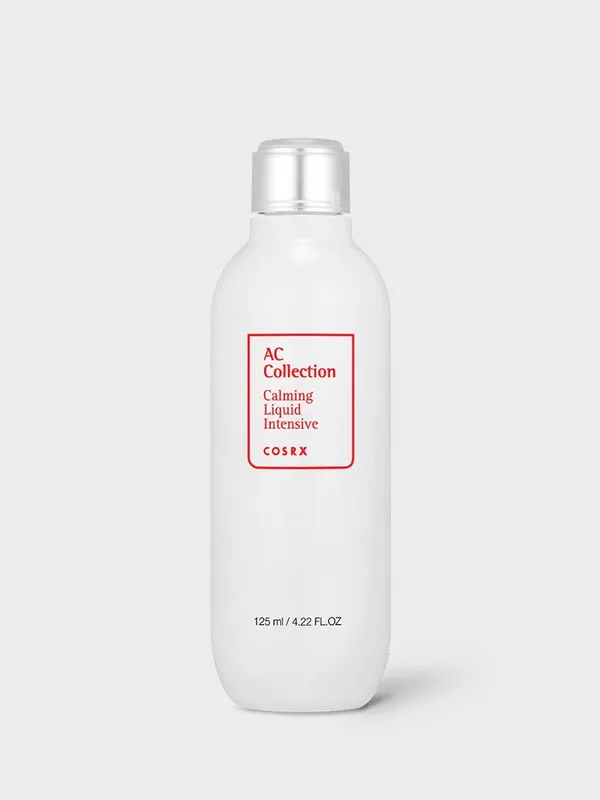
COSRX
AC Collection Calming Liquid Intensive
uncategorizedtypically $12–30

Cleaner pick · Safest toners & mists we have rated
SPALIFE
Deep Collagen Pore-perfecting Toner Pads+22 on ingredient safety
$15
Ingredient safetyRaters agree
Ranked by safety only. Greenlens earns from qualifying purchases. Payout never affects a rating, a ranking, or the cleaner pick.
Raters split
Ingredient safety
A 28-point gap between the two loudest voices.
70Health Canada Ingredient HotlistGovernment
vs98Greenlens Precautionary ScreenIndependent
050100
See why, ingredient by ingredientAll 570 cleaner options, safest first We show the best 12, including the strongest on each axis.
Every rater, every axis
Ingredient safety
28 pts apartIndependent — not funded by the brands it rates. Auto-linked to this product, not yet human-reviewed. Checked this week. about this rater →
A government authority. Auto-linked to this product, not yet human-reviewed. Checked this week. about this rater →
Independent — not funded by the brands it rates. Auto-linked to this product, not yet human-reviewed. Checked this week. about this rater →
Independent — not funded by the brands it rates. Auto-linked to this product, not yet human-reviewed. Checked this week. about this rater →
A government authority. Auto-linked to this product, not yet human-reviewed. Checked this week. about this rater →
Also screened, nothing found: EU Harmonised Classification (CLP Annex VI) · California Proposition 65 · IARC Monographs · US NTP Report on Carcinogens · ECHA SVHC Candidate List
Environmental
Also screened, nothing found: EU Microplastics Restriction
Coverage & match quality
5 ratings · 1 of 4 axes
- Some ratings rest on an automatic match that has not been human-reviewed.
- Fewer raters reach smaller-brand products, so a missing rating is not a clean bill of health, only a gap.
Weighted by what you care about
Tune your weights
composite recomputes live
+
1.0×
Environmentalno rating
No rater covers this axis for this product, so its weight can't move the score.
Laborno rating
No rater covers this axis for this product, so its weight can't move the score.
Packagingno rating
No rater covers this axis for this product, so its weight can't move the score.
0 means ignored. Higher = more weight in your composite.
Ingredients, decoded
Data availability
Robust23 of 23 characterized
Our sources have reference data on all 23 listed ingredients.
Worth a look (5)
ANSES endocrine candidateflagged by 1 of 9 lists
Health Canada Hotlist — restrictedflagged by 1 of 9 lists
Health Canada Hotlist — restrictedflagged by 1 of 9 lists
EU-restricted (with limits)flagged by 2 of 9 lists
Mild sensitizer for someflagged by 1 of 9 lists
No flags in our sources (18)
What these ingredient tags mean (5)
These describe what an ingredient is, not whether it is a problem. The stance marks above are the ratings; these are not.
commonly dryingAlcohol
- Alcohol: A fast-evaporating solvent that leaves a dry finish. International Chemical Safety Card ICSC 0044, Ethanol (anhydrous), prepared by an international group of experts for the ILO and WHO: "The substance defats the skin, which may cause dryness or cracking." Bommannan et al., as reported by Lachenmeier DW, "Safety evaluation of topical applications of ethanol on the skin and inside the oral cavity", J Occup Med Toxicol 2008;3:26, DOI 10.1186/1745-6673-3-26, open access, reference 82: "Bommannan et al. found in vivo in humans that ethanol enters the skin and removes measurable quantities of the lipid barrier material from the stratum corneum." Both describe stronger exposures than a cosmetic formula.
common irritantMelaleuca Alternifolia Leaf Oil
- Melaleuca Alternifolia Leaf Oil: An essential oil whose oxidation products carry its sensitising potential; the EU assesses it as a moderate skin sensitiser. SCCS Scientific Opinion on Tea Tree Oil (CAS/EC 68647-73-4 / 285-377-1), SCCS/1681/25, adopted 30 October 2025, which concludes it is a moderate skin sensitiser. It does not set maximum levels of its own: it assesses the concentrations the applicant defended, and finds no concern at 2,0% in shampoo, 1,0% in shower gel, 1,0% in face wash and 0,1% in face cream, for oil conforming to ISO 4730:2017, in adults, in non-sprayable formats. It draws on the earlier SCCP opinions SCCP/1155/08 and SCCP/0843/04 and incorporates their data by reference; it says nothing about their status.
exfoliating acidLactic Acid, Glycolic Acid
- Lactic Acid: An alpha hydroxy acid that loosens surface skin cells; it also makes skin more sun-sensitive while you use it. FDA, "Guidance for Industry: Labeling for Topically Applied Cosmetic Products Containing Alpha Hydroxy Acids as Ingredients" (announced at 70 FR 1721, 10 January 2005; FDA web pages title it "Labeling for Cosmetics Containing Alpha Hydroxy Acids"), which names this acid and recommends the statement "Sunburn Alert: This product contains an alpha hydroxy acid (AHA) that may increase your skin's sensitivity to the sun and particularly the possibility of sunburn."
- Glycolic Acid: An alpha hydroxy acid that loosens surface skin cells; it also makes skin more sun-sensitive while you use it. FDA, "Guidance for Industry: Labeling for Topically Applied Cosmetic Products Containing Alpha Hydroxy Acids as Ingredients" (announced at 70 FR 1721, 10 January 2005; FDA web pages title it "Labeling for Cosmetics Containing Alpha Hydroxy Acids"), which names this acid and recommends the statement "Sunburn Alert: This product contains an alpha hydroxy acid (AHA) that may increase your skin's sensitivity to the sun and particularly the possibility of sunburn."
humectantPanthenol, Sodium Hyaluronate
- Panthenol: A provitamin B5 humectant used in products aimed at irritated and healing skin. On the humectant half: Ferreira VTP, Silva GC, Martin AA, Maia Campos PMBG, "Topical dexpanthenol effects on physiological parameters of the stratum corneum by Confocal Raman Microspectroscopy", Skin Res Technol 2023;29(9):e13317, DOI 10.1111/srt.13317, PMID 37753694, PMCID PMC10504581, open access, Introduction: "As a humectant, it has been shown to retain water more efficiently than other humectants during the last stages of dehydration..." On the soothing half, which that paper does NOT support: Cho YS, Kim HO, Woo SM, Lee DH, "Use of Dexpanthenol for Atopic Dermatitis—Benefits and Recommendations Based on Current Evidence", J Clin Med 2022;11(14):3943, DOI 10.3390/jcm11143943, PMID 35887707, open access, section 3.5: "To facilitate wound healing, dexpanthenol reduces inflammation, and promotes cell proliferation and epithelial remodeling."
- Sodium Hyaluronate: A humectant that holds a large amount of water at the skin surface. Chylińska N, Maciejczyk M, "Hyaluronic Acid and Skin: Its Role in Aging and Wound-Healing Processes", Gels 2025;11(4):281, DOI 10.3390/gels11040281, PMID 40277717, open access: hyaluronic acid's "high osmotic activity and anionic structure enable it to bind large amounts of water", and "sodium and potassium hyaluronate are widely used in moisturizing products". The same review notes that high-molecular-weight hyaluronic acid does not penetrate the deeper layers.
soothingPanthenol, Allantoin
- Panthenol: A provitamin B5 humectant used in products aimed at irritated and healing skin. On the humectant half: Ferreira VTP, Silva GC, Martin AA, Maia Campos PMBG, "Topical dexpanthenol effects on physiological parameters of the stratum corneum by Confocal Raman Microspectroscopy", Skin Res Technol 2023;29(9):e13317, DOI 10.1111/srt.13317, PMID 37753694, PMCID PMC10504581, open access, Introduction: "As a humectant, it has been shown to retain water more efficiently than other humectants during the last stages of dehydration..." On the soothing half, which that paper does NOT support: Cho YS, Kim HO, Woo SM, Lee DH, "Use of Dexpanthenol for Atopic Dermatitis—Benefits and Recommendations Based on Current Evidence", J Clin Med 2022;11(14):3943, DOI 10.3390/jcm11143943, PMID 35887707, open access, section 3.5: "To facilitate wound healing, dexpanthenol reduces inflammation, and promotes cell proliferation and epithelial remodeling."
- Allantoin: A skin protectant used at low levels in products aimed at irritated skin. FDA OTC skin protectant monograph, 21 CFR 347.10(a), lists allantoin as a skin-protectant active at 0,5 to 2%. Its labelled indications are 21 CFR 347.50(b)(1), "temporarily protects minor: cuts, scrapes, burns", and (b)(2), which covers chafed, chapped or cracked skin. The monograph does not give it the "minor skin irritation and itching" wording; that one belongs to colloidal oatmeal, sodium bicarbonate and one combination, and to topical starch without the itching half.