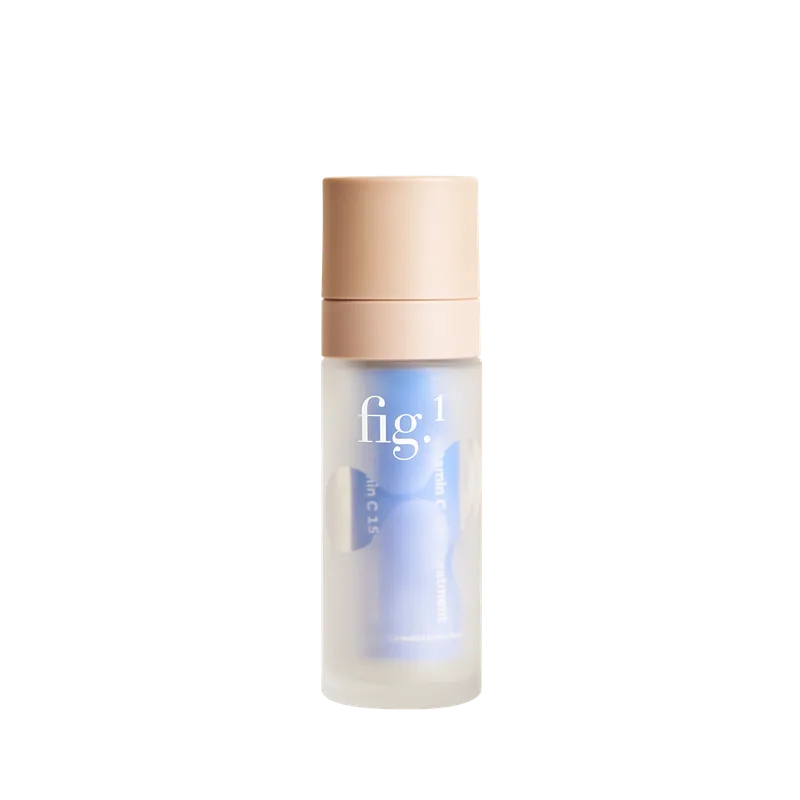
Fig.1
Vitamin C 15% Treatment
uncategorized

Cleaner pick · Safest treatments we have rated
Iunik Global
Lime Moisture Mild Peeling Gel+27 on ingredient safety
$14
Ingredient safetyRaters agree
Ranked by safety only. Greenlens earns from qualifying purchases. Payout never affects a rating, a ranking, or the cleaner pick.
Raters split
Ingredient safety
A 40-point gap between the two loudest voices.
60ANSES Endocrine DisruptorsGovernment
vs100Greenlens Precautionary ScreenIndependent
050100
See why, ingredient by ingredientAll 948 cleaner options, safest first We show the best 12, including the strongest on each axis.
Every rater, every axis
Ingredient safety
40 pts apartIndependent — not funded by the brands it rates. Auto-linked to this product, not yet human-reviewed. Checked this week. about this rater →
A government authority. Auto-linked to this product, not yet human-reviewed. Checked this week. about this rater →
Independent — not funded by the brands it rates. Auto-linked to this product, not yet human-reviewed. Checked this week. about this rater →
Independent — not funded by the brands it rates. Auto-linked to this product, not yet human-reviewed. Checked this week. about this rater →
Also screened, nothing found: US NTP Report on Carcinogens · Health Canada Ingredient Hotlist · California Proposition 65 · EU Harmonised Classification (CLP Annex VI) · IARC Monographs · ECHA SVHC Candidate List
Recognized on a safer-ingredients list: US EPA Safer Choice recognizes 60% of ingredients as safer choices — a marker, never a score.
Environmental
Also screened, nothing found: EU Microplastics Restriction
Coverage & match quality
4 ratings · 1 of 4 axes
- Some ratings rest on an automatic match that has not been human-reviewed.
- Fewer raters reach smaller-brand products, so a missing rating is not a clean bill of health, only a gap.
Weighted by what you care about
Tune your weights
composite recomputes live
+
1.0×
Environmentalno rating
No rater covers this axis for this product, so its weight can't move the score.
Laborno rating
No rater covers this axis for this product, so its weight can't move the score.
Packagingno rating
No rater covers this axis for this product, so its weight can't move the score.
0 means ignored. Higher = more weight in your composite.
Ingredients, decoded
Data availability
Robust25 of 25 characterized
Our sources have reference data on all 25 listed ingredients.
Worth a look (4)
ANSES endocrine candidateflagged by 1 of 9 lists →
ANSES endocrine candidateflagged by 1 of 9 lists →
EU-restricted (with limits)flagged by 2 of 9 lists →
EU-regulated fragrance allergenflagged by 1 of 9 lists →
No flags in our sources (21)
- Water
- Glycerinhumectant
- Sodium Polyacryloyldimethyl Taurate
- Propanediol
- Tocopherol
- C13-15 Alkane
- Pentylene Glycol
- Limnanthes Alba Seed Oil
- Oenothera Biennis Oil
- Vitis Vinifera Seed Oil
- Borago Officinalis Seed Oil
- Ferulic Acid
- Triolein
- Ceramide NPbarrier lipid
- Glyceryl Dioleate
- Caprylic/Capric Triglyceride
- Disodium EDTA
- Linoleic Acidbarrier lipid
- Phospholipids
- Phytosterols
- Malonic Acid
What these ingredient tags mean (2)
These describe what an ingredient is, not whether it is a problem. The stance marks above are the ratings; these are not.
humectantGlycerin
- Glycerin: A humectant, and one of the two ingredients a comparison of moisturiser components found made a significant difference to skin hydration. FDA OTC skin protectant monograph, 21 CFR 347.10(h), lists glycerin as a skin protectant at 20 to 45%. On the humectant half: Jeong CB, Han JY, Cho JC, Suh KD, Nam GW, "Analysis of electrical property changes of skin by oil-in-water emulsion components", Int J Cosmet Sci 2013;35(4):402-410, DOI 10.1111/ics.12059, PMID 23621673, found that "glycerine and urea showed significant skin hydration effects compared with other humectants".
barrier lipidCeramide NP, Linoleic Acid
- Ceramide NP: One of the lipid families the skin barrier is actually built from. Feingold KR and Elias PM, "The role of ceramides in the disruption of the cutaneous permeability barrier, a common manifestation of skin disorders", J Lipid Res 2024;65(8):100593, DOI 10.1016/j.jlr.2024.100593, open access: the barrier lipid matrix "by weight is approximately 50% ceramides, 25% cholesterol, and 15% free fatty acids".
- Linoleic Acid: An essential fatty acid the skin barrier uses and cannot make for itself. Khnykin D, Miner JH, Jahnsen F, "Role of fatty acid transporters in epidermis", Dermatoendocrinol 2011;3(2):53-61, DOI 10.4161/derm.3.2.14816, open access: "The human body can produce all but two of the fatty acids it needs: linoleic acid (C18:2, n6) and alpha-linolenic acid (C18:3, n3)", and replacing linoleic acid with a non-essential fatty acid "will lead to barrier defects". Feingold and Elias, J Lipid Res 2024: linoleate "is required for the synthesis of a subgroup of acylceramides".