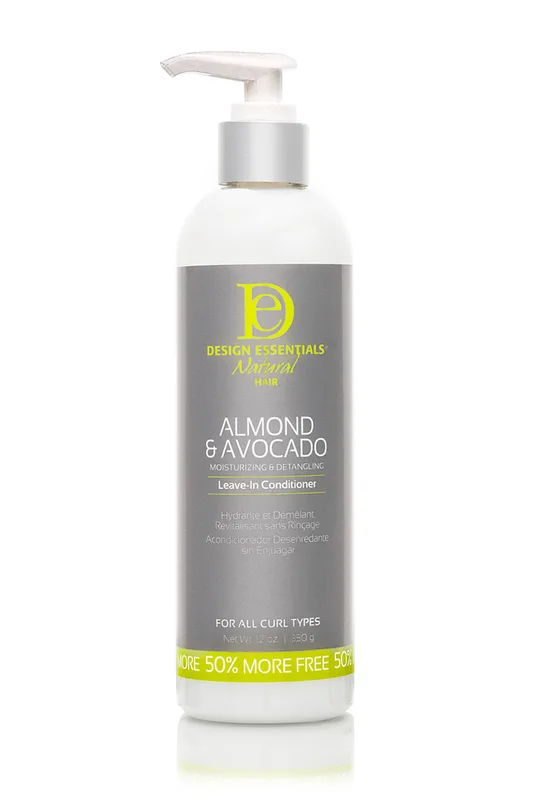
Design Essentials
Detangling Leave In Conditioner, Almond & Avocado
Conditioner

Cleaner pick · Safest cleansing we have rated
Africology Skincare & Spa
Bio Therapy Shampoo+58 on ingredient safety
250ml · 47.50 ZAR · 19 ZAR/100 ml
Ingredient safetyRaters agree
Ranked by safety only. Greenlens earns from qualifying purchases. Payout never affects a rating, a ranking, or the cleaner pick.
Raters split
Ingredient safety
A 63-point gap between the two loudest voices.
25Greenlens Precautionary ScreenIndependent
vs88Greenlens Tolerance ScreenIndependent
050100
See why, ingredient by ingredientAll 9149 cleaner options, safest first We show the best 12, including the strongest on each axis.
Every rater, every axis
Ingredient safety
63 pts apartA government authority. Auto-linked to this product, not yet human-reviewed. Checked this week. about this rater →
Independent — not funded by the brands it rates. Auto-linked to this product, not yet human-reviewed. Checked this week. about this rater →
Independent — not funded by the brands it rates. Auto-linked to this product, not yet human-reviewed. Checked this week. about this rater →
A government authority. Auto-linked to this product, not yet human-reviewed. Checked this week. about this rater →
A government authority. Auto-linked to this product, not yet human-reviewed. Checked this week. about this rater →
Independent — not funded by the brands it rates. Auto-linked to this product, not yet human-reviewed. Checked this week. about this rater →
A government authority. Auto-linked to this product, not yet human-reviewed. Checked this week. about this rater →
Also screened, nothing found: ECHA SVHC Candidate List · US NTP Report on Carcinogens · IARC Monographs
Environmental
Also screened, nothing found: EU Microplastics Restriction
Labor
raters agreeRun by a nonprofit. Auto-linked to this product, not yet human-reviewed. This rates Design Essentials as a company and applies to everything they make, not this product alone. Checked this week. about this rater →
Run by a nonprofit. Auto-linked to this product, not yet human-reviewed. Checked this week. about this rater →
Coverage & match quality
9 ratings · 2 of 4 axes
- Some ratings rest on an automatic match that has not been human-reviewed.
- Fewer raters reach smaller-brand products, so a missing rating is not a clean bill of health, only a gap.
Weighted by what you care about
Tune your weights
composite recomputes live
+
1.0×
Environmentalno rating
No rater covers this axis for this product, so its weight can't move the score.
1.0×
Packagingno rating
No rater covers this axis for this product, so its weight can't move the score.
0 means ignored. Higher = more weight in your composite.
Ingredients, decoded
Data availability
Good22 of 29 characterized
Our sources have reference data on 22 of 29 listed ingredients; 7 are uncharacterized in our data — a gap, not a clean bill.
Worth a look (10)
Carcinogen-linkedflagged by 5 of 9 lists →
ANSES endocrine candidateflagged by 3 of 9 lists →
ANSES endocrine candidateflagged by 3 of 9 lists →
Undisclosed fragrance blendflagged by 2 of 9 lists →
ANSES endocrine candidateflagged by 2 of 9 lists →
EU harmonised skin sensitizerflagged by 2 of 9 lists →
EU harmonised skin sensitizerflagged by 2 of 9 lists →
EU-restricted (with limits)flagged by 2 of 9 lists →
Mild sensitizer for someflagged by 1 of 9 lists →
- Melaleuca Alternifolia Leaf Oilcommon irritantfragrance materialperfuming · antioxidantraters disagree
Mild sensitizer for someflagged by 1 of 9 lists →
No flags in our sources (12)
No data in our sources (7)
- Glyerin
- Hydrogenated Vegetable Oil Prunus Amygdalus Oil
- Persea Gratissimia Oil
- Hypericum Perforatum
- Anthemis Nobilis
- Cetaurea Cynaus
- Tilia Cordata
Not a verdict — our authorities simply have no reference for these.
What these ingredient tags mean (5)
These describe what an ingredient is, not whether it is a problem. The stance marks above are the ratings; these are not.
common irritantPropylene Glycol, Melaleuca Alternifolia Leaf Oil
- Propylene Glycol: A solvent that shows up in patch-test clinics, more often as irritation than as allergy. American Contact Dermatitis Society, Allergen of the Year 2018 (Jacob SE, Scheman A, McGowan MA, Dermatitis 2018;29(1):3-5).
- Melaleuca Alternifolia Leaf Oil: An essential oil whose oxidation products carry its sensitising potential; the EU assesses it as a moderate skin sensitiser. SCCS Scientific Opinion on Tea Tree Oil (CAS/EC 68647-73-4 / 285-377-1), SCCS/1681/25, adopted 30 October 2025, which concludes it is a moderate skin sensitiser. It does not set maximum levels of its own: it assesses the concentrations the applicant defended, and finds no concern at 2,0% in shampoo, 1,0% in shower gel, 1,0% in face wash and 0,1% in face cream, for oil conforming to ISO 4730:2017, in adults, in non-sprayable formats. It draws on the earlier SCCP opinions SCCP/1155/08 and SCCP/0843/04 and incorporates their data by reference; it says nothing about their status.
fragrance materialBenzyl Benzoate, Citral, Geraniol, Linalool, Limonene
- Benzyl Benzoate: A balsamic fragrance component named separately on the label. EU Regulation (EC) 1223/2009, Annex III entry 85: a fragrance substance whose presence must be indicated in the list of ingredients above 0,001% in leave-on and 0,01% in rinse-off products, because of established contact-allergy risk.
- Citral: A lemon-scented fragrance component named separately on the label; the one name covers three related substances. EU Regulation (EC) 1223/2009, Annex III entry 70: a fragrance substance whose presence must be indicated in the list of ingredients above 0,001% in leave-on and 0,01% in rinse-off products, because of established contact-allergy risk. As replaced by Commission Regulation (EU) 2026/909 of 27 April 2026, the entry is a GROUPED one covering citral, geranial and neral, declared collectively as "Citral", with per-product-type caps from 0,032% in deodorant to 1,2% in rinse-off and leave-on hair products. Its three substances carry two different sell-through dates: products not complying may not be placed on the Union market from 1 January 2027 in every case, and may not be made available from 1 July 2028 for citral, footnote (**), or from 1 August 2028 for geranial and neral, footnote (***). In the consolidated text those two footnotes are renumbered (46) and (47); both are worded "these substances", where the footnotes that attach to a single named substance say "that substance".
- Geraniol: A rose-scented fragrance component named separately on the label. EU Regulation (EC) 1223/2009, Annex III entry 78: a fragrance substance whose presence must be indicated in the list of ingredients above 0,001% in leave-on and 0,01% in rinse-off products, because of established contact-allergy risk.
- Linalool: A floral fragrance component named separately on the label. EU Regulation (EC) 1223/2009, Annex III entry 84: a fragrance substance whose presence must be indicated in the list of ingredients above 0,001% in leave-on and 0,01% in rinse-off products, because of established contact-allergy risk.
- Limonene: A citrus-smelling fragrance component named separately on the label; the one name covers three related isomers. EU Regulation (EC) 1223/2009, Annex III entry 88: a fragrance substance whose presence must be indicated in the list of ingredients above 0,001% in leave-on and 0,01% in rinse-off products, because of established contact-allergy risk. That entry carries transition footnote (37): stock that does not comply, lawfully placed on the Union market before the 31 July 2026 cut-off, may still be made available until 31 July 2028. It is marked on the racemic dl-limonene/Dipentene line and the (S)-(l-limonene) line, but NOT the (R)-p-mentha-1,8-diene (d-limonene) line, CAS 5989-27-5, whose duty was already running as entry 88 before Commission Regulation (EU) 2023/1545 and so needed no transition. All three isomers are declared under the single glossary name "Limonene", so that name on a label does not identify which of them is present.
undeclared fragrance blendFragrance
- Fragrance: A blend the label does not itemize, so what is in it cannot be read from the ingredient list. EU Regulation (EC) 1223/2009 permits the collective term "parfum"; the SCCS Opinion on Fragrance Allergens (SCCS/1459/11) reviews the contact-allergy evidence for the substances it can contain.
retinoidRetinyl Palmitate
- Retinyl Palmitate: A gentler vitamin A ester that the skin converts to retinol. SCCS Opinion on Vitamin A (Retinol, Retinyl Acetate, Retinyl Palmitate), SCCS/1576/16, which assesses retinyl palmitate by name; EU Regulation (EC) 1223/2009 Annex III entry 376 covers it in the same group as retinol.
rich occlusiveParaffinum Liquidum
- Paraffinum Liquidum: A refined oil that sits on the surface of the skin; it has a heavy finish. FDA OTC skin protectant monograph, 21 CFR 347.10(l): "Mineral oil, 50 to 100 percent; 30 to 35 percent in combination with colloidal oatmeal in accordance with 347.20(a)(4)."
Where this came from
Cruelty-free status recorded from crueltyfree.peta.org ↗
Researched facts on Greenlens always carry the page that stated them — nothing is inferred from a model's memory.