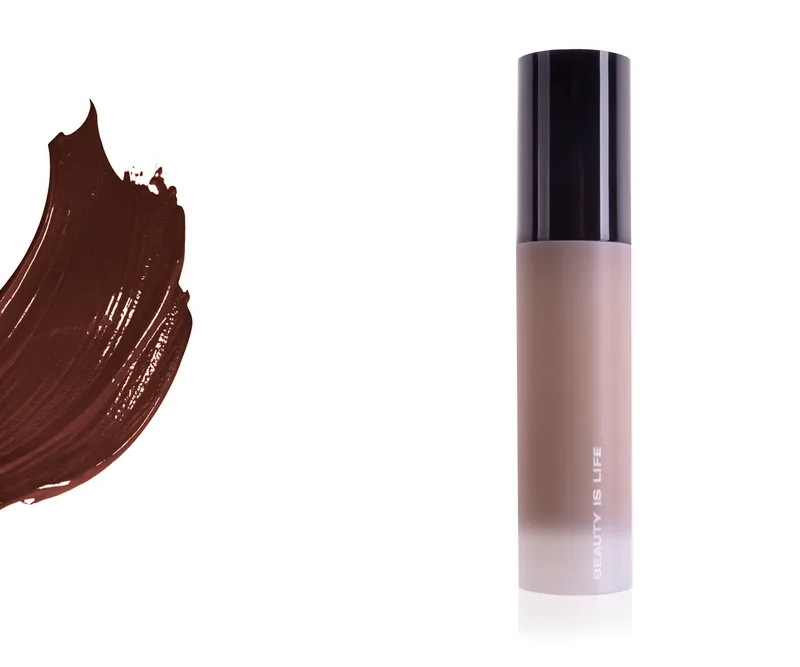
Beauty is Life
Satin Foundation Fluid Make-Up, Warm Chestnut 10W
uncategorized

Cleaner pick · Safest face we have rated
Tarte
maracuja juicy blush & bronzer multi-stick+80 on ingredient safety
$38
Ingredient safetyRaters agree
Ranked by safety only. Greenlens earns from qualifying purchases. Payout never affects a rating, a ranking, or the cleaner pick.
Raters split
Ingredient safety
A 80-point gap between the two loudest voices.
0Greenlens Precautionary ScreenIndependent
vs80ECHA SVHC Candidate ListGovernment
050100
See why, ingredient by ingredientAll 18872 cleaner options, safest first We show the best 12, including the strongest on each axis.
Every rater, every axis
Ingredient safety
80 pts apartA government authority. Auto-linked to this product, not yet human-reviewed. Checked this week. about this rater →
A government authority. Auto-linked to this product, not yet human-reviewed. Checked this week. about this rater →
Independent — not funded by the brands it rates. Auto-linked to this product, not yet human-reviewed. Checked this week. about this rater →
Independent — not funded by the brands it rates. Auto-linked to this product, not yet human-reviewed. Checked this week. about this rater →
A government authority. Auto-linked to this product, not yet human-reviewed. Checked this week. about this rater →
Independent — not funded by the brands it rates. Auto-linked to this product, not yet human-reviewed. Checked this week. about this rater →
A government authority. Auto-linked to this product, not yet human-reviewed. Checked this week. about this rater →
Also screened, nothing found: EU Harmonised Classification (CLP Annex VI) · US NTP Report on Carcinogens · California Proposition 65
Environmental
Also screened, nothing found: EU Microplastics Restriction
Coverage & match quality
7 ratings · 1 of 4 axes
- Some ratings rest on an automatic match that has not been human-reviewed.
- Fewer raters reach smaller-brand products, so a missing rating is not a clean bill of health, only a gap.
Weighted by what you care about
Tune your weights
composite recomputes live
+
1.0×
Environmentalno rating
No rater covers this axis for this product, so its weight can't move the score.
Laborno rating
No rater covers this axis for this product, so its weight can't move the score.
Packagingno rating
No rater covers this axis for this product, so its weight can't move the score.
0 means ignored. Higher = more weight in your composite.
Ingredients, decoded
Data availability
Robust52 of 54 characterized
Our sources have reference data on 52 of 54 listed ingredients; 2 are uncharacterized in our data — a gap, not a clean bill.
Worth a look (14)
ANSES CMR-listedflagged by 3 of 9 lists →
ANSES CMR-listedflagged by 5 of 9 lists →
Endocrine-activeflagged by 3 of 9 lists →
Endocrine-activeflagged by 3 of 9 lists →
Endocrine-activeflagged by 4 of 9 lists →
IARC probable carcinogen (Group 2A)flagged by 5 of 9 lists →
ANSES endocrine candidateflagged by 2 of 9 lists →
Undisclosed fragrance blendflagged by 2 of 9 lists →
Mild sensitizer for someflagged by 1 of 9 lists →
Persistent / bioaccumulativeflagged by 1 of 9 lists →
Transparency concernflagged by 1 of 9 lists →
Health Canada Hotlist — restrictedflagged by 1 of 9 lists →
EU-regulated fragrance allergenflagged by 1 of 9 lists →
EU-regulated fragrance allergenflagged by 1 of 9 lists →
No flags in our sources (38)
- AQUA
- PROPYLENE GLYCOLcommon irritant
- CAPRYLIC/CAPRIC TRIGLYCERIDE
- OCTYLDODECANOL
- PEG-7 HYDROGENATED CASTOR OIL
- KAOLIN
- CETYL ALCOHOL
- ISOPROPYL MYRISTATEcomedogenic in testing
- MAGNESIUM MYRISTATE
- HYDROGENATED POLYISOBUTENE
- HYDROGENATED COCO-GLYCERIDES
- MAGNESIUM ALUMINUM SILICATE
- STEARIC ACID
- GLYCERINhumectant
- PALMITIC ACID
- GLYCERYL STEARATE
- XANTHAN GUM
- SODIUM LACTATE
- SODIUM PCAhumectant
- DIMETHICONErich occlusive
- TRIMETHYLSILOXYSILICATE
- ALLANTOINsoothing
- SODIUM CHLORIDE
- CETEARYL ALCOHOL
- CETYL PALMITATE
- COCOGLYCERIDES
- SODIUM BENZOATE
- FRUCTOSE
- GLYCINE
- INOSITOL
- NIACINAMIDEsoothing
- UREAhumectant
- IRON OXIDES CI 77491
- CI 77492
- CI 77499
- ULTRAMARINES CI 77007
- CARMINE CI 75470
- FERRIC FERROCYANIDE CI 77510
No data in our sources (2)
Not a verdict — our authorities simply have no reference for these.
What these ingredient tags mean (7)
These describe what an ingredient is, not whether it is a problem. The stance marks above are the ratings; these are not.
comedogenic in testingISOPROPYL MYRISTATE
- ISOPROPYL MYRISTATE: A light emollient, and the ester the rabbit-ear literature names first. Fulton JE Jr, Pay SR, Fulton JE 3rd, "Comedogenicity of current therapeutic products, cosmetics, and ingredients in the rabbit ear", J Am Acad Dermatol 1984;10(1):96-105, PMID 6229554. The openly readable abstract names this ingredient among its "ingredient offenders", in prose and without a numeric rating: "Ingredient offenders include isopropyl myristate and its analogs, such as isopropyl palmitate, isopropyl isostearate, butyl stearate, isostearyl neopentanoate, myristyl myristate..." The rabbit-ear assay rates raw ingredients and does not predict how a finished formula behaves on human skin.
common irritantPROPYLENE GLYCOL, SODIUM LAURYL SULFATE
- PROPYLENE GLYCOL: A solvent that shows up in patch-test clinics, more often as irritation than as allergy. American Contact Dermatitis Society, Allergen of the Year 2018 (Jacob SE, Scheman A, McGowan MA, Dermatitis 2018;29(1):3-5).
- SODIUM LAURYL SULFATE: A strong cleansing agent used as the reference irritant in skin-irritation testing. OECD Test Guideline 439 (in vitro skin irritation, reconstructed human epidermis), paragraph 24: "The suggested PC is 5% aqueous SDS", sodium dodecyl sulphate, the same substance as sodium lauryl sulfate, CAS 151-21-3.
undeclared fragrance blendPARFUM
- PARFUM: A blend the label does not itemize, so what is in it cannot be read from the ingredient list. EU Regulation (EC) 1223/2009 permits the collective term "parfum"; the SCCS Opinion on Fragrance Allergens (SCCS/1459/11) reviews the contact-allergy evidence for the substances it can contain.
exfoliating acidLACTIC ACID
- LACTIC ACID: An alpha hydroxy acid that loosens surface skin cells; it also makes skin more sun-sensitive while you use it. FDA, "Guidance for Industry: Labeling for Topically Applied Cosmetic Products Containing Alpha Hydroxy Acids as Ingredients" (announced at 70 FR 1721, 10 January 2005; FDA web pages title it "Labeling for Cosmetics Containing Alpha Hydroxy Acids"), which names this acid and recommends the statement "Sunburn Alert: This product contains an alpha hydroxy acid (AHA) that may increase your skin's sensitivity to the sun and particularly the possibility of sunburn."
rich occlusiveDIMETHICONE
- DIMETHICONE: A silicone that forms a film on the surface of the skin without an oily feel. FDA OTC skin protectant monograph, 21 CFR 347.10(g), lists dimethicone as a skin protectant at 1 to 30%.
humectantGLYCERIN, SODIUM PCA, UREA
- GLYCERIN: A humectant, and one of the two ingredients a comparison of moisturiser components found made a significant difference to skin hydration. FDA OTC skin protectant monograph, 21 CFR 347.10(h), lists glycerin as a skin protectant at 20 to 45%. On the humectant half: Jeong CB, Han JY, Cho JC, Suh KD, Nam GW, "Analysis of electrical property changes of skin by oil-in-water emulsion components", Int J Cosmet Sci 2013;35(4):402-410, DOI 10.1111/ics.12059, PMID 23621673, found that "glycerine and urea showed significant skin hydration effects compared with other humectants".
- SODIUM PCA: The salt of PCA, one of the water-holding substances the outer layer of skin makes for itself. Dörner C, Steinbinder J, Sachslehner AP, Sukseree S, Eckhart L, "Amino Acid Metabolism of the Skin: Control by Specific Enzymes and Contribution to Protective Functions", Metabolites 2025;15(9):601, DOI 10.3390/metabo15090601, open access, section "Glutamine Is Converted to Pyrrolidone Carboxylic Acid, a Component of the NMF": "pyrrolidone carboxylic acid (PCA), also known as pyroglutamic acid or 5-oxoproline, accumulates in the stratum corneum."
- UREA: A humectant the skin already makes; at higher levels it also softens thickened skin. StatPearls, "Moisturizers", NCBI Bookshelf NBK545171, updated 12 February 2024: "Urea is a component of NMF. The addition of urea to moisturizers helps with the absorption of water into the stratum corneum." The FDA label for prescription-strength urea calls it keratolytic and states that its mechanism of action is not yet known.
soothingALLANTOIN, NIACINAMIDE
- ALLANTOIN: A skin protectant used at low levels in products aimed at irritated skin. FDA OTC skin protectant monograph, 21 CFR 347.10(a), lists allantoin as a skin-protectant active at 0,5 to 2%. Its labelled indications are 21 CFR 347.50(b)(1), "temporarily protects minor: cuts, scrapes, burns", and (b)(2), which covers chafed, chapped or cracked skin. The monograph does not give it the "minor skin irritation and itching" wording; that one belongs to colloidal oatmeal, sodium bicarbonate and one combination, and to topical starch without the itching half.
- NIACINAMIDE: A vitamin B3 form that supports the skin barrier and has anti-inflammatory activity; it turns up in products aimed at acne, rosacea and eczema. Camillo L, Zavattaro E, Savoia P, "Nicotinamide: A Multifaceted Molecule in Skin Health and Beyond", Medicina (Kaunas) 2025;61(2):254, DOI 10.3390/medicina61020254, PMID 40005371, open access: it "is extensively used in ... the treatment of dermatological conditions such as blistering diseases, atopic dermatitis, rosacea, and acne vulgaris", and contributes to reducing inflammation. On the acne evidence specifically: Liu H, Yu H, Xia J, Liu L, Liu GJ, Sang H, Peinemann F, "Topical azelaic acid, salicylic acid, nicotinamide, sulphur, zinc and fruit acid (alpha-hydroxy acid) for acne", Cochrane Database Syst Rev 2020;5:CD011368, DOI 10.1002/14651858.CD011368.pub2, PMID 32356369, records "low-quality evidence" for every nicotinamide comparison it could pool, and none of its four nicotinamide studies measured the physician global assessment at all.