
Cleaner pick · Safest styling we have rated
Catrice Cosmetics
Curl Freeze Lash Styling Gel+91 on ingredient safety
$7
Ingredient safetyRaters agree
Ranked by safety only. Greenlens earns from qualifying purchases. Payout never affects a rating, a ranking, or the cleaner pick.
Raters split
Ingredient safety
A 85-point gap between the two loudest voices.
0Greenlens Tolerance ScreenIndependent
vs85Health Canada Ingredient HotlistGovernment
050100
See why, ingredient by ingredientAll 5725 cleaner options, safest first We show the best 12, including the strongest on each axis.
Every rater, every axis
Ingredient safety
85 pts apartA government authority. Auto-linked to this product, not yet human-reviewed. Checked this week. about this rater →
Independent — not funded by the brands it rates. Auto-linked to this product, not yet human-reviewed. Checked this week. about this rater →
Independent — not funded by the brands it rates. Auto-linked to this product, not yet human-reviewed. Checked this week. about this rater →
A government authority. Auto-linked to this product, not yet human-reviewed. Checked this week. about this rater →
Independent — not funded by the brands it rates. Auto-linked to this product, not yet human-reviewed. Checked this week. about this rater →
A government authority. Auto-linked to this product, not yet human-reviewed. Checked this week. about this rater →
Also screened, nothing found: ECHA SVHC Candidate List · US NTP Report on Carcinogens · California Proposition 65 · IARC Monographs
Environmental
Also screened, nothing found: EU Microplastics Restriction
Labor
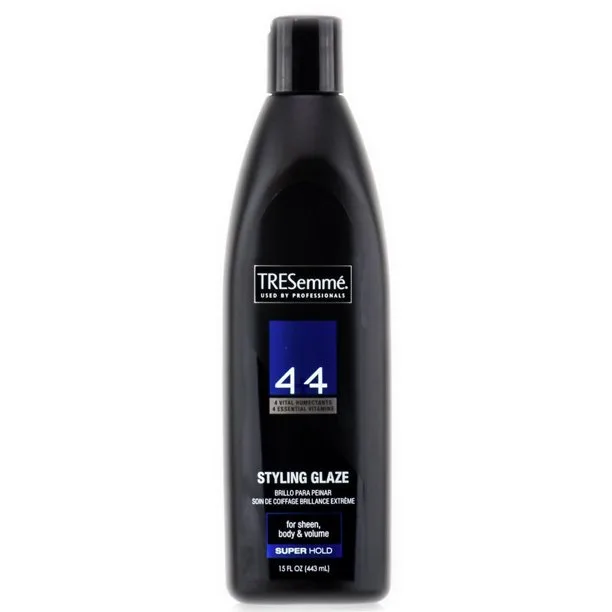
Run by a nonprofit. Auto-linked to this product, not yet human-reviewed. This rates TRESemme as a company and applies to everything they make, not this product alone. Checked this week. about this rater →
Coverage & match quality
7 ratings · 2 of 4 axes
- Some ratings rest on an automatic match that has not been human-reviewed.
- Fewer raters reach smaller-brand products, so a missing rating is not a clean bill of health, only a gap.
Weighted by what you care about
Tune your weights
composite recomputes live
+
1.0×
Environmentalno rating
No rater covers this axis for this product, so its weight can't move the score.
1.0×
Packagingno rating
No rater covers this axis for this product, so its weight can't move the score.
0 means ignored. Higher = more weight in your composite.
Ingredients, decoded
Data availability
Robust36 of 38 characterized
Our sources have reference data on 36 of 38 listed ingredients; 2 are uncharacterized in our data — a gap, not a clean bill.
Worth a look (15)
Carcinogen-linkedflagged by 4 of 9 lists →
Reproductive-toxicant concernflagged by 5 of 9 lists →
ANSES endocrine candidateflagged by 3 of 9 lists →
ANSES endocrine candidateflagged by 1 of 9 lists →
EU harmonised skin sensitizerflagged by 2 of 9 lists →
Undisclosed fragrance blendflagged by 2 of 9 lists →
EU harmonised skin sensitizerflagged by 2 of 9 lists →
ANSES endocrine candidateflagged by 2 of 9 lists →
ANSES endocrine candidateflagged by 2 of 9 lists →
ANSES endocrine candidateflagged by 2 of 9 lists →
ANSES endocrine candidateflagged by 1 of 9 lists →
Mild sensitizer for someflagged by 1 of 9 lists →
EU-restricted (with limits)flagged by 2 of 9 lists →
EU-restricted (with limits)flagged by 2 of 9 lists →
Health Canada Hotlist — restrictedflagged by 1 of 9 lists →
No flags in our sources (21)
- WATER
- POLYQUATERNIUM-11
- PVP
- POLYQUATERNIUM-4
- PPG-12-PEG-50 LANOLIN
- POLYSORBATE 20
- OLEALKONIUM CHLORIDE
- DITALLOWDIMONIUM CHLORIDE
- PROPYLENE GLYCOLcommon irritant
- PEG-12 DIMETHICONE
- ETHYLHEXYL HYDROXYSTEARATE
- DIMETHICONErich occlusive
- POLYGLYCERYL-4 OLEATE
- SORBITOL
- SODIUM PCAhumectant
- TOCOPHERYL ACETATE
- POLYSORBATE 80
- PANTHENOLhumectantsoothing
- SODIUM HYALURONATEhumectant
- NIACINAMIDEsoothing
- BIOTIN
No data in our sources (2)
Not a verdict — our authorities simply have no reference for these.
What these ingredient tags mean (8)
These describe what an ingredient is, not whether it is a problem. The stance marks above are the ratings; these are not.
commonly dryingALCOHOL DENAT
- ALCOHOL DENAT: Denatured ethanol: a fast-evaporating solvent that thins a formula and leaves a dry finish. International Chemical Safety Card ICSC 0044, Ethanol (anhydrous), prepared by an international group of experts for the ILO and WHO: "The substance defats the skin, which may cause dryness or cracking." WHO Guidelines on Hand Hygiene in Health Care (2009) records depletion of the skin lipid barrier by lipid-dissolving alcohols, and also that "the lipid-dissolving effect of alcohols is inversely related to their concentration". Both describe stronger exposures than a cosmetic formula.
common irritantQUATERNIUM-15, PROPYLENE GLYCOL
- QUATERNIUM-15: A preservative the EU no longer permits in cosmetics; the ban followed a reproductive-toxicity classification and a finding that its safety could not be established. Prohibited in cosmetics by EU Regulation (EC) 1223/2009, Annex II entry 1386 (cis-1-(3-chlorallyl)-3,5,7-triaza-1-azoniaadamantane chloride, quaternium-15, CAS 51229-78-8), inserted by Commission Regulation (EU) 2019/831, which simultaneously deleted its Annex V entry 31 permitting it as a preservative. Recital 6 of that Regulation gives TWO grounds, not one: the cis-isomer "has been classified as a CMR substance of category 2", AND the SCCS opinion of 13 to 14 December 2011 concluded that "on the basis of the available data the safety of Quaternium-15 for use in cosmetic products cannot be established". The underlying classification is Regulation (EC) 1272/2008 (CLP) Annex VI index 612-251-00-9, inserted by Commission Regulation (EC) 790/2009: Flam. Sol. 2, Repr. 2 (H361d, "suspected of damaging the unborn child"), Acute Tox. 4, Skin Irrit. 2 (H315), Skin Sens. 1 (H317) and Aquatic Chronic 2. That entry carries no carcinogenicity classification of any kind. Skin Sens. 1 and Skin Irrit. 2 in the same entry are the harmonised classification behind this row's tag, so the tag rests on a sensitisation finding rather than on the reproductive-toxicity ground for the ban.
- PROPYLENE GLYCOL: A solvent that shows up in patch-test clinics, more often as irritation than as allergy. American Contact Dermatitis Society, Allergen of the Year 2018 (Jacob SE, Scheman A, McGowan MA, Dermatitis 2018;29(1):3-5).
fragrance materialBENZYL ALCOHOL, BENZYL SALICYLATE, BUTYLPHENYL METHYLPROPIONAL, LINALOOL, HEXYL CINNAMAL, COUMARIN, EUGENOL
- BENZYL ALCOHOL: Used both as a fragrance component and as a preservative; the EU names it either way. EU Regulation (EC) 1223/2009, Annex III entry 45: a fragrance substance whose presence must be indicated in the list of ingredients above 0,001% in leave-on and 0,01% in rinse-off products, because of established contact-allergy risk. That entry carries transition footnote (38), which is footnote (37) plus a condition: stock that does not comply may still be made available until 31 July 2028 only "provided that they comply with the restrictions applicable on 15 August 2023", and only if it was lawfully placed on the Union market before the 31 July 2026 cut-off. Entry 45 covers its non-preservative use; it is separately an allowed preservative at Annex V entry 34.
- BENZYL SALICYLATE: A faintly floral fragrance component named separately on the label. EU Regulation (EC) 1223/2009, Annex III entry 75: a fragrance substance whose presence must be indicated in the list of ingredients above 0,001% in leave-on and 0,01% in rinse-off products, because of established contact-allergy risk. The entry was replaced by Commission Regulation (EU) 2026/909 of 27 April 2026, which caps it per product type from 0,004% in oral products to 4% in fragrance products; under its footnote (**), products not complying may not be placed on the Union market from 1 January 2027, nor made available from 1 July 2028.
- BUTYLPHENYL METHYLPROPIONAL: A lily-of-the-valley fragrance component the EU no longer permits in cosmetics. It was a declarable fragrance allergen at Annex III entry 83 of EU Regulation (EC) 1223/2009. Commission Regulation (EU) 2021/1902 deleted that entry and moved it to Annex II entry 1666 (2-(4-tert-butylbenzyl) propionaldehyde, CAS 80-54-6), prohibiting it in cosmetic products from 1 March 2022.
- LINALOOL: A floral fragrance component named separately on the label. EU Regulation (EC) 1223/2009, Annex III entry 84: a fragrance substance whose presence must be indicated in the list of ingredients above 0,001% in leave-on and 0,01% in rinse-off products, because of established contact-allergy risk.
- HEXYL CINNAMAL: A jasmine-like fragrance component named separately on the label. EU Regulation (EC) 1223/2009, Annex III entry 87: a fragrance substance whose presence must be indicated in the list of ingredients above 0,001% in leave-on and 0,01% in rinse-off products, because of established contact-allergy risk.
- COUMARIN: A sweet hay-scented fragrance component named separately on the label. EU Regulation (EC) 1223/2009, Annex III entry 77: a fragrance substance whose presence must be indicated in the list of ingredients above 0,001% in leave-on and 0,01% in rinse-off products, because of established contact-allergy risk.
- EUGENOL: A clove-scented fragrance component named separately on the label. EU Regulation (EC) 1223/2009, Annex III entry 71: a fragrance substance whose presence must be indicated in the list of ingredients above 0,001% in leave-on and 0,01% in rinse-off products, because of established contact-allergy risk.
undeclared fragrance blendFRAGRANCE
- FRAGRANCE: A blend the label does not itemize, so what is in it cannot be read from the ingredient list. EU Regulation (EC) 1223/2009 permits the collective term "parfum"; the SCCS Opinion on Fragrance Allergens (SCCS/1459/11) reviews the contact-allergy evidence for the substances it can contain.
exfoliating acidLACTIC ACID
- LACTIC ACID: An alpha hydroxy acid that loosens surface skin cells; it also makes skin more sun-sensitive while you use it. FDA, "Guidance for Industry: Labeling for Topically Applied Cosmetic Products Containing Alpha Hydroxy Acids as Ingredients" (announced at 70 FR 1721, 10 January 2005; FDA web pages title it "Labeling for Cosmetics Containing Alpha Hydroxy Acids"), which names this acid and recommends the statement "Sunburn Alert: This product contains an alpha hydroxy acid (AHA) that may increase your skin's sensitivity to the sun and particularly the possibility of sunburn."
rich occlusiveDIMETHICONE
- DIMETHICONE: A silicone that forms a film on the surface of the skin without an oily feel. FDA OTC skin protectant monograph, 21 CFR 347.10(g), lists dimethicone as a skin protectant at 1 to 30%.
humectantSODIUM PCA, PANTHENOL, SODIUM HYALURONATE
- SODIUM PCA: The salt of PCA, one of the water-holding substances the outer layer of skin makes for itself. Dörner C, Steinbinder J, Sachslehner AP, Sukseree S, Eckhart L, "Amino Acid Metabolism of the Skin: Control by Specific Enzymes and Contribution to Protective Functions", Metabolites 2025;15(9):601, DOI 10.3390/metabo15090601, open access, section "Glutamine Is Converted to Pyrrolidone Carboxylic Acid, a Component of the NMF": "pyrrolidone carboxylic acid (PCA), also known as pyroglutamic acid or 5-oxoproline, accumulates in the stratum corneum."
- PANTHENOL: A provitamin B5 humectant used in products aimed at irritated and healing skin. On the humectant half: Ferreira VTP, Silva GC, Martin AA, Maia Campos PMBG, "Topical dexpanthenol effects on physiological parameters of the stratum corneum by Confocal Raman Microspectroscopy", Skin Res Technol 2023;29(9):e13317, DOI 10.1111/srt.13317, PMID 37753694, PMCID PMC10504581, open access, Introduction: "As a humectant, it has been shown to retain water more efficiently than other humectants during the last stages of dehydration..." On the soothing half, which that paper does NOT support: Cho YS, Kim HO, Woo SM, Lee DH, "Use of Dexpanthenol for Atopic Dermatitis—Benefits and Recommendations Based on Current Evidence", J Clin Med 2022;11(14):3943, DOI 10.3390/jcm11143943, PMID 35887707, open access, section 3.5: "To facilitate wound healing, dexpanthenol reduces inflammation, and promotes cell proliferation and epithelial remodeling."
- SODIUM HYALURONATE: A humectant that holds a large amount of water at the skin surface. Chylińska N, Maciejczyk M, "Hyaluronic Acid and Skin: Its Role in Aging and Wound-Healing Processes", Gels 2025;11(4):281, DOI 10.3390/gels11040281, PMID 40277717, open access: hyaluronic acid's "high osmotic activity and anionic structure enable it to bind large amounts of water", and "sodium and potassium hyaluronate are widely used in moisturizing products". The same review notes that high-molecular-weight hyaluronic acid does not penetrate the deeper layers.
soothingPANTHENOL, NIACINAMIDE
- PANTHENOL: A provitamin B5 humectant used in products aimed at irritated and healing skin. On the humectant half: Ferreira VTP, Silva GC, Martin AA, Maia Campos PMBG, "Topical dexpanthenol effects on physiological parameters of the stratum corneum by Confocal Raman Microspectroscopy", Skin Res Technol 2023;29(9):e13317, DOI 10.1111/srt.13317, PMID 37753694, PMCID PMC10504581, open access, Introduction: "As a humectant, it has been shown to retain water more efficiently than other humectants during the last stages of dehydration..." On the soothing half, which that paper does NOT support: Cho YS, Kim HO, Woo SM, Lee DH, "Use of Dexpanthenol for Atopic Dermatitis—Benefits and Recommendations Based on Current Evidence", J Clin Med 2022;11(14):3943, DOI 10.3390/jcm11143943, PMID 35887707, open access, section 3.5: "To facilitate wound healing, dexpanthenol reduces inflammation, and promotes cell proliferation and epithelial remodeling."
- NIACINAMIDE: A vitamin B3 form that supports the skin barrier and has anti-inflammatory activity; it turns up in products aimed at acne, rosacea and eczema. Camillo L, Zavattaro E, Savoia P, "Nicotinamide: A Multifaceted Molecule in Skin Health and Beyond", Medicina (Kaunas) 2025;61(2):254, DOI 10.3390/medicina61020254, PMID 40005371, open access: it "is extensively used in ... the treatment of dermatological conditions such as blistering diseases, atopic dermatitis, rosacea, and acne vulgaris", and contributes to reducing inflammation. On the acne evidence specifically: Liu H, Yu H, Xia J, Liu L, Liu GJ, Sang H, Peinemann F, "Topical azelaic acid, salicylic acid, nicotinamide, sulphur, zinc and fruit acid (alpha-hydroxy acid) for acne", Cochrane Database Syst Rev 2020;5:CD011368, DOI 10.1002/14651858.CD011368.pub2, PMID 32356369, records "low-quality evidence" for every nicotinamide comparison it could pool, and none of its four nicotinamide studies measured the physician global assessment at all.