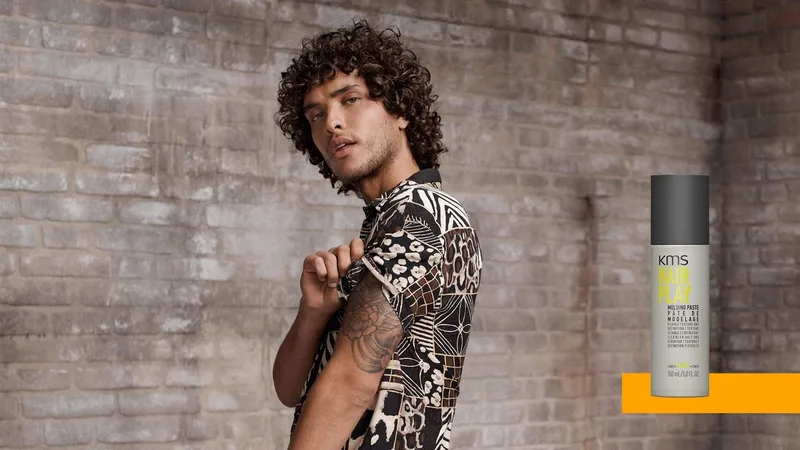
KMS
Hairplay Molding Paste
Hair Styling Aid

Cleaner pick · Safest styling we have rated
Catrice Cosmetics
Curl Freeze Lash Styling Gel+81 on ingredient safety
$7
Ingredient safetyRaters agree
Ranked by safety only. Greenlens earns from qualifying purchases. Payout never affects a rating, a ranking, or the cleaner pick.
Raters split
Ingredient safety
A 88-point gap between the two loudest voices.
0Greenlens Precautionary ScreenIndependent
vs88Greenlens Tolerance ScreenIndependent
050100
See why, ingredient by ingredientAll 5350 cleaner options, safest first We show the best 12, including the strongest on each axis.
Every rater, every axis
Ingredient safety
88 pts apartIndependent — not funded by the brands it rates. Auto-linked to this product, not yet human-reviewed. Checked this week. about this rater →
Independent — not funded by the brands it rates. Auto-linked to this product, not yet human-reviewed. Checked this week. about this rater →
Independent — not funded by the brands it rates. Auto-linked to this product, not yet human-reviewed. Checked this week. about this rater →
A government authority. Auto-linked to this product, not yet human-reviewed. Checked this week. about this rater →
Also screened, nothing found: Health Canada Ingredient Hotlist · US NTP Report on Carcinogens · ECHA SVHC Candidate List · EU Harmonised Classification (CLP Annex VI) · California Proposition 65 · IARC Monographs
Environmental
Also screened, nothing found: EU Microplastics Restriction
Coverage & match quality
4 ratings · 1 of 4 axes
- Some ratings rest on an automatic match that has not been human-reviewed.
- Fewer raters reach smaller-brand products, so a missing rating is not a clean bill of health, only a gap.
Weighted by what you care about
Tune your weights
composite recomputes live
+
1.0×
Environmentalno rating
No rater covers this axis for this product, so its weight can't move the score.
Laborno rating
No rater covers this axis for this product, so its weight can't move the score.
Packagingno rating
No rater covers this axis for this product, so its weight can't move the score.
0 means ignored. Higher = more weight in your composite.
Ingredients, decoded
Data availability
Robust30 of 30 characterized
Our sources have reference data on all 30 listed ingredients.
Worth a look (10)
Carcinogen-linkedflagged by 1 of 9 lists →
Carcinogen-linkedflagged by 1 of 9 lists →
Endocrine-activeflagged by 3 of 9 lists →
Endocrine-activeflagged by 3 of 9 lists →
Endocrine-activeflagged by 4 of 9 lists →
ANSES endocrine candidateflagged by 1 of 9 lists →
Undisclosed fragrance blendflagged by 2 of 9 lists →
EU-regulated fragrance allergenflagged by 1 of 9 lists →
EU-restricted (with limits)flagged by 2 of 9 lists →
Mild sensitizer for someflagged by 1 of 9 lists →
No flags in our sources (20)
- Water / Aqua / Eau
- Lanolin Wax / Lanolin Cera / Cire De Lanoline
- Petrolatumrich occlusive
- Cetearyl Alcohol
- Ozokerite
- PVP
- Mineral Oil / Paraffinum Liquidum / Huile Min rale
- PEG-40 Castor Oil
- Propylene Glycolcommon irritant
- Ethylhexyl Palmitate
- Copernicia Cerifera Wax / Copernicia Cerifera Cera / Cire De Carnauba
- Polysorbate 60
- Polyquaternium-11
- Vitis Vinifera Seed Oil
- Dimethiconerich occlusive
- Trilaureth-4 Phosphate
- PVM/MA Decadiene Crosspolymer
- Benzophenone-4
- Caprylyl Glycol
- Sorbitol
What these ingredient tags mean (4)
These describe what an ingredient is, not whether it is a problem. The stance marks above are the ratings; these are not.
commonly dryingAlcohol Denat
- Alcohol Denat: Denatured ethanol: a fast-evaporating solvent that thins a formula and leaves a dry finish. International Chemical Safety Card ICSC 0044, Ethanol (anhydrous), prepared by an international group of experts for the ILO and WHO: "The substance defats the skin, which may cause dryness or cracking." WHO Guidelines on Hand Hygiene in Health Care (2009) records depletion of the skin lipid barrier by lipid-dissolving alcohols, and also that "the lipid-dissolving effect of alcohols is inversely related to their concentration". Both describe stronger exposures than a cosmetic formula.
common irritantPropylene Glycol, DMDM Hydantoin, Diazolidinyl Urea
- Propylene Glycol: A solvent that shows up in patch-test clinics, more often as irritation than as allergy. American Contact Dermatitis Society, Allergen of the Year 2018 (Jacob SE, Scheman A, McGowan MA, Dermatitis 2018;29(1):3-5).
- DMDM Hydantoin: A preservative the FDA lists as a formaldehyde releaser, which is why formaldehyde-reactive skin can notice it. How much reaches the skin depends on the whole formula, not on this name alone. EU Regulation (EC) 1223/2009, Annex V entry 33, permits DMDM hydantoin as a preservative up to 0,6%. The FDA names it among the "formaldehyde and formaldehyde releasing ingredients" on its Allergens in Cosmetics page (content current 25 February 2022). SCCS Scientific Advice SCCS/1632/21, on the threshold for the "contains formaldehyde" warning, describes a study in which a moisturiser spiked to the 0,6% Annex V maximum released at least 40 ppm formaldehyde. Annex V preamble point 2, as amended by Commission Regulation (EU) 2022/1181, requires the warning "releases formaldehyde" on any product whose total released formaldehyde exceeds 0,001% (10 ppm). That Regulation states the sensitisation ground itself, so the chain is drawn by the regulator and not by us: recital (2) names the class, "Certain of those preservatives are gradually releasing formaldehyde in order to fulfil a preserving function in the final cosmetic product (so called formaldehyde releasers)", and recital (3) gives the purpose of the warning, "In order to inform consumers sensitised to formaldehyde about the presence of formaldehyde that may trigger an allergic reaction". Recital (1) records that formaldehyde is classified a skin sensitizer (Category 1) in Part 3 of Annex VI to Regulation (EC) 1272/2008.
- Diazolidinyl Urea: A preservative the FDA lists as a formaldehyde releaser, so formaldehyde-reactive skin can notice it. How much reaches the skin depends on the whole formula, not on this name alone. EU Regulation (EC) 1223/2009, Annex V entry 46, permits diazolidinyl urea as a preservative up to 0,5%. The FDA names it among the "formaldehyde and formaldehyde releasing ingredients" on its Allergens in Cosmetics page (content current 25 February 2022). Annex V preamble point 2, as amended by Commission Regulation (EU) 2022/1181, requires the warning "releases formaldehyde" on any product whose total released formaldehyde exceeds 0,001% (10 ppm). That Regulation states the sensitisation ground itself, so the chain is drawn by the regulator and not by us: recital (2) names the class, "Certain of those preservatives are gradually releasing formaldehyde in order to fulfil a preserving function in the final cosmetic product (so called formaldehyde releasers)", and recital (3) gives the purpose of the warning, "In order to inform consumers sensitised to formaldehyde about the presence of formaldehyde that may trigger an allergic reaction". Recital (1) records that formaldehyde is classified a skin sensitizer (Category 1) in Part 3 of Annex VI to Regulation (EC) 1272/2008.
undeclared fragrance blendFragrance / Parfum
- Fragrance / Parfum: A blend the label does not itemize, so what is in it cannot be read from the ingredient list. EU Regulation (EC) 1223/2009 permits the collective term "parfum"; the SCCS Opinion on Fragrance Allergens (SCCS/1459/11) reviews the contact-allergy evidence for the substances it can contain.
rich occlusivePetrolatum, Dimethicone
- Petrolatum: A barrier that sits on the surface of the skin, which is also why it feels heavy. FDA OTC skin protectant monograph, 21 CFR 347.10(m) and (r), lists petrolatum and white petrolatum as skin protectants at 30 to 100%.
- Dimethicone: A silicone that forms a film on the surface of the skin without an oily feel. FDA OTC skin protectant monograph, 21 CFR 347.10(g), lists dimethicone as a skin protectant at 1 to 30%.