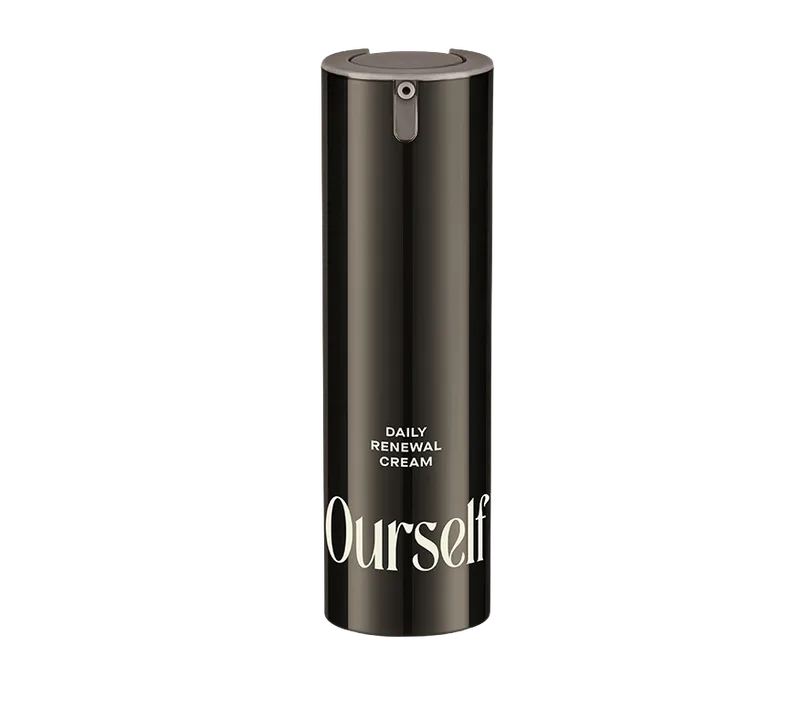
Ourself
Daily Renewal Cream
uncategorized

Cleaner pick · Safest moisturizers we have rated
Iunik Global
Beta Glucan Daily Moisture Cream+19 on ingredient safety
$17
Ingredient safetyRaters agree
Ranked by safety only. Greenlens earns from qualifying purchases. Payout never affects a rating, a ranking, or the cleaner pick.
Raters split
Ingredient safety
A 30-point gap between the two loudest voices.
70Health Canada Ingredient HotlistGovernment
vs100Greenlens Tolerance ScreenIndependent
050100
See why, ingredient by ingredientAll 2324 cleaner options, safest first We show the best 12, including the strongest on each axis.
Every rater, every axis
Ingredient safety
30 pts apartIndependent — not funded by the brands it rates. Auto-linked to this product, not yet human-reviewed. Checked this week. about this rater →
A government authority. Auto-linked to this product, not yet human-reviewed. Checked this week. about this rater →
Independent — not funded by the brands it rates. Auto-linked to this product, not yet human-reviewed. Checked this week. about this rater →
A government authority. Auto-linked to this product, not yet human-reviewed. Checked this week. about this rater →
Independent — not funded by the brands it rates. Auto-linked to this product, not yet human-reviewed. Checked this week. about this rater →
Also screened, nothing found: US NTP Report on Carcinogens · ECHA SVHC Candidate List · ANSES Endocrine Disruptors · California Proposition 65 · IARC Monographs
Environmental
Also screened, nothing found: EU Microplastics Restriction
Coverage & match quality
5 ratings · 1 of 4 axes
- Some ratings rest on an automatic match that has not been human-reviewed.
- Fewer raters reach smaller-brand products, so a missing rating is not a clean bill of health, only a gap.
Weighted by what you care about
Tune your weights
composite recomputes live
+
1.0×
Environmentalno rating
No rater covers this axis for this product, so its weight can't move the score.
Laborno rating
No rater covers this axis for this product, so its weight can't move the score.
Packagingno rating
No rater covers this axis for this product, so its weight can't move the score.
0 means ignored. Higher = more weight in your composite.
Ingredients, decoded
Data availability
Robust47 of 47 characterized
Our sources have reference data on all 47 listed ingredients.
Worth a look (3)
EU harmonised skin sensitizerflagged by 2 of 9 lists →
Health Canada Hotlist — restrictedflagged by 1 of 9 lists →
Health Canada Hotlist — restrictedflagged by 1 of 9 lists →
No flags in our sources (44)
- Aqua/Water/Eau
- Caprylic/Capric Triglyceride
- Coco-Caprylate/Caprate
- Propanediol
- Niacinamidesoothing
- Butyrospermum Parkii Butter
- Polyglyceryl-2 Stearate
- Glycerinhumectant
- Isosorbide Dicaprylate
- Magnesium Aluminum Silicate
- Glyceryl Stearate
- Triheptanoin
- Stearyl Alcohol
- Pentaerythrityl Distearate
- Cetyl Alcohol
- 1,2-Hexanediol
- Oryza Sativa Bran Extract
- Ceratonia Siliqua Fruit Extract
- Zingiber Officinale Root Extract
- Chlorella Vulgaris Extract
- Haematococcus Pluvialis Extract
- Palmitoyl Pentapeptide-4
- Palmitoyl Hexapeptide-12
- Hydrolyzed Hyaluronic Acidhumectant
- Saccharide Isomerate
- Rosmarinus Officinalis Leaf Extract
- Bisabololsoothing
- Helianthus Annuus Extract
- Phytosterols
- Phospholipids
- Lecithin
- Linoleic Acidbarrier lipid
- Tocopherol
- Pentylene Glycol
- Castor Oil/IPDI Copolymer
- Mannitol
- Dilinoleic Acid/Butanediol Copolymer
- Xanthan Gum
- Sodium Lactate
- Caprylyl Glycol
- Levulinic Acidfragrance material
- Sodium Levulinate
- Trisodium Ethylenediamine Disuccinate
- Ethylhexylglycerin
What these ingredient tags mean (5)
These describe what an ingredient is, not whether it is a problem. The stance marks above are the ratings; these are not.
fragrance materialBenzyl Alcohol
- Benzyl Alcohol: Used both as a fragrance component and as a preservative; the EU names it either way. EU Regulation (EC) 1223/2009, Annex III entry 45: a fragrance substance whose presence must be indicated in the list of ingredients above 0,001% in leave-on and 0,01% in rinse-off products, because of established contact-allergy risk. That entry carries transition footnote (38), which is footnote (37) plus a condition: stock that does not comply may still be made available until 31 July 2028 only "provided that they comply with the restrictions applicable on 15 August 2023", and only if it was lawfully placed on the Union market before the 31 July 2026 cut-off. Entry 45 covers its non-preservative use; it is separately an allowed preservative at Annex V entry 34.
exfoliating acidLactic Acid
- Lactic Acid: An alpha hydroxy acid that loosens surface skin cells; it also makes skin more sun-sensitive while you use it. FDA, "Guidance for Industry: Labeling for Topically Applied Cosmetic Products Containing Alpha Hydroxy Acids as Ingredients" (announced at 70 FR 1721, 10 January 2005; FDA web pages title it "Labeling for Cosmetics Containing Alpha Hydroxy Acids"), which names this acid and recommends the statement "Sunburn Alert: This product contains an alpha hydroxy acid (AHA) that may increase your skin's sensitivity to the sun and particularly the possibility of sunburn."
humectantGlycerin, Hydrolyzed Hyaluronic Acid
- Glycerin: A humectant, and one of the two ingredients a comparison of moisturiser components found made a significant difference to skin hydration. FDA OTC skin protectant monograph, 21 CFR 347.10(h), lists glycerin as a skin protectant at 20 to 45%. On the humectant half: Jeong CB, Han JY, Cho JC, Suh KD, Nam GW, "Analysis of electrical property changes of skin by oil-in-water emulsion components", Int J Cosmet Sci 2013;35(4):402-410, DOI 10.1111/ics.12059, PMID 23621673, found that "glycerine and urea showed significant skin hydration effects compared with other humectants".
- Hydrolyzed Hyaluronic Acid: A humectant that holds a large amount of water at the skin surface. Chylińska N, Maciejczyk M, "Hyaluronic Acid and Skin: Its Role in Aging and Wound-Healing Processes", Gels 2025;11(4):281, DOI 10.3390/gels11040281, PMID 40277717, open access: hyaluronic acid's "high osmotic activity and anionic structure enable it to bind large amounts of water", and "sodium and potassium hyaluronate are widely used in moisturizing products". The same review notes that high-molecular-weight hyaluronic acid does not penetrate the deeper layers.
barrier lipidLinoleic Acid
- Linoleic Acid: An essential fatty acid the skin barrier uses and cannot make for itself. Khnykin D, Miner JH, Jahnsen F, "Role of fatty acid transporters in epidermis", Dermatoendocrinol 2011;3(2):53-61, DOI 10.4161/derm.3.2.14816, open access: "The human body can produce all but two of the fatty acids it needs: linoleic acid (C18:2, n6) and alpha-linolenic acid (C18:3, n3)", and replacing linoleic acid with a non-essential fatty acid "will lead to barrier defects". Feingold and Elias, J Lipid Res 2024: linoleate "is required for the synthesis of a subgroup of acylceramides".
soothingNiacinamide, Bisabolol
- Niacinamide: A vitamin B3 form that supports the skin barrier and has anti-inflammatory activity; it turns up in products aimed at acne, rosacea and eczema. Camillo L, Zavattaro E, Savoia P, "Nicotinamide: A Multifaceted Molecule in Skin Health and Beyond", Medicina (Kaunas) 2025;61(2):254, DOI 10.3390/medicina61020254, PMID 40005371, open access: it "is extensively used in ... the treatment of dermatological conditions such as blistering diseases, atopic dermatitis, rosacea, and acne vulgaris", and contributes to reducing inflammation. On the acne evidence specifically: Liu H, Yu H, Xia J, Liu L, Liu GJ, Sang H, Peinemann F, "Topical azelaic acid, salicylic acid, nicotinamide, sulphur, zinc and fruit acid (alpha-hydroxy acid) for acne", Cochrane Database Syst Rev 2020;5:CD011368, DOI 10.1002/14651858.CD011368.pub2, PMID 32356369, records "low-quality evidence" for every nicotinamide comparison it could pool, and none of its four nicotinamide studies measured the physician global assessment at all.
- Bisabolol: The main soothing component isolated from chamomile. Eddin LB et al., "Health Benefits, Pharmacological Effects, Molecular Mechanisms, and Therapeutic Potential of alpha-Bisabolol", Nutrients 2022;14(7):1370, DOI 10.3390/nu14071370, PMID 35405982, open access: it "is integrated in many cosmetic formulations due to its skin soothing effects, well documented dermal absorption and the absence of dermal irritations or photosensitivity following its application". The EMA HMPC assessment report on Matricaria recutita (EMA/HMPC/55837/2011) discusses its anti-inflammatory data.