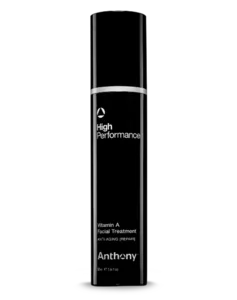
Anthony
High Performance Vitamin A Hydrating Facial Lotion
uncategorized

Cleaner pick · Safest moisturizers we have rated
Iunik Global
Beta Glucan Daily Moisture Cream+74 on ingredient safety
$17
Ingredient safetyRaters agree
Ranked by safety only. Greenlens earns from qualifying purchases. Payout never affects a rating, a ranking, or the cleaner pick.
Raters split
Ingredient safety
A 88-point gap between the two loudest voices.
0ANSES Endocrine DisruptorsGovernment
vs88Greenlens Tolerance ScreenIndependent
050100
See why, ingredient by ingredientAll 5778 cleaner options, safest first We show the best 12, including the strongest on each axis.
Every rater, every axis
Ingredient safety
88 pts apartIndependent — not funded by the brands it rates. Auto-linked to this product, not yet human-reviewed. Checked this week. about this rater →
A government authority. Auto-linked to this product, not yet human-reviewed. Checked this week. about this rater →
Independent — not funded by the brands it rates. Auto-linked to this product, not yet human-reviewed. Checked this week. about this rater →
Independent — not funded by the brands it rates. Auto-linked to this product, not yet human-reviewed. Checked this week. about this rater →
A government authority. Auto-linked to this product, not yet human-reviewed. Checked this week. about this rater →
A government authority. Auto-linked to this product, not yet human-reviewed. Checked this week. about this rater →
A government authority. Auto-linked to this product, not yet human-reviewed. Checked this week. about this rater →
A government authority. Auto-linked to this product, not yet human-reviewed. Checked this week. about this rater →
Also screened, nothing found: US NTP Report on Carcinogens · IARC Monographs
Environmental
A government authority. Auto-linked to this product, not yet human-reviewed. Checked this week. about this rater →
Labor
Run by a nonprofit. Auto-linked to this product, not yet human-reviewed. Checked this week. about this rater →
Coverage & match quality
10 ratings · 3 of 4 axes
- Some ratings rest on an automatic match that has not been human-reviewed.
- Fewer raters reach smaller-brand products, so a missing rating is not a clean bill of health, only a gap.
Weighted by what you care about
Tune your weights
composite recomputes live
+
1.0×
1.0×
1.0×
Packagingno rating
No rater covers this axis for this product, so its weight can't move the score.
0 means ignored. Higher = more weight in your composite.
Ingredients, decoded
Data availability
Robust37 of 38 characterized
Our sources have reference data on 37 of 38 listed ingredients; 1 is uncharacterized in our data — a gap, not a clean bill.
Worth a look (15)
Carcinogen-linkedflagged by 5 of 9 lists →
Strong contact sensitizerflagged by 3 of 9 lists →
ANSES endocrine candidateflagged by 3 of 9 lists →
ANSES endocrine candidateflagged by 3 of 9 lists →
ANSES endocrine candidateflagged by 3 of 9 lists →
Undisclosed fragrance blendflagged by 2 of 9 lists →
ANSES endocrine candidateflagged by 1 of 9 lists →
ANSES endocrine candidateflagged by 2 of 9 lists →
ANSES endocrine candidateflagged by 2 of 9 lists →
EU harmonised skin sensitizerflagged by 2 of 9 lists →
EU harmonised skin sensitizerflagged by 2 of 9 lists →
Persistent / bioaccumulativeflagged by 1 of 9 lists →
EU microplastics-restrictedflagged by 1 of 9 lists →
EU-restricted (with limits)flagged by 2 of 9 lists →
EU-regulated fragrance allergenflagged by 1 of 9 lists →
No flags in our sources (22)
- Aqua
- Glycerinhumectant
- Caprylic/Capric Triglyceride
- C12-15 Alkyl Ethylhexanoate
- Butyrospermum Parkii Butter
- Cetyl Alcohol
- Squalane
- Cholesterolbarrier lipid
- Methyl Glucose Sesquistearate
- PEG-20 Methyl Glucose Sesquistearate
- PEG-40 Stearate
- Sorbitan Stearate
- Acetyl Tetrapeptide-9
- Butylene Glycol
- Caprylyl Glycol
- Tropolone
- 1,2-Hexanediol
- Chlorphenesin
- Potassium Sorbate
- Sodium Benzoate
- Disodium EDTA
- PPG-2 Methyl Etherfragrance material
No data in our sources (1)
Not a verdict — our authorities simply have no reference for these.
What these ingredient tags mean (5)
These describe what an ingredient is, not whether it is a problem. The stance marks above are the ratings; these are not.
common irritantMethylisothiazolinone
- Methylisothiazolinone: A preservative that patch-test clinics see reactions to often enough that the EU banned it from leave-on products. American Contact Dermatitis Society, Allergen of the Year 2013 (Castanedo-Tardana MP, Zug KA, Dermatitis 2013;24(1):2-6); SCCS Opinion on Methylisothiazolinone (P94), Submission II, SENSITISATION ONLY (SCCS/1521/13, revision of 27 March 2014); banned in leave-on cosmetics by Commission Regulation (EU) 2016/1198, which recites the need to address "the increased incidence of allergies induced by methylisothiazolinone".
fragrance materialBenzyl Benzoate, Benzyl Salicylate, Citral, Citronellol, Geraniol, Hydroxycitronellal, Limonene, Linalool
- Benzyl Benzoate: A balsamic fragrance component named separately on the label. EU Regulation (EC) 1223/2009, Annex III entry 85: a fragrance substance whose presence must be indicated in the list of ingredients above 0,001% in leave-on and 0,01% in rinse-off products, because of established contact-allergy risk.
- Benzyl Salicylate: A faintly floral fragrance component named separately on the label. EU Regulation (EC) 1223/2009, Annex III entry 75: a fragrance substance whose presence must be indicated in the list of ingredients above 0,001% in leave-on and 0,01% in rinse-off products, because of established contact-allergy risk. The entry was replaced by Commission Regulation (EU) 2026/909 of 27 April 2026, which caps it per product type from 0,004% in oral products to 4% in fragrance products; under its footnote (**), products not complying may not be placed on the Union market from 1 January 2027, nor made available from 1 July 2028.
- Citral: A lemon-scented fragrance component named separately on the label; the one name covers three related substances. EU Regulation (EC) 1223/2009, Annex III entry 70: a fragrance substance whose presence must be indicated in the list of ingredients above 0,001% in leave-on and 0,01% in rinse-off products, because of established contact-allergy risk. As replaced by Commission Regulation (EU) 2026/909 of 27 April 2026, the entry is a GROUPED one covering citral, geranial and neral, declared collectively as "Citral", with per-product-type caps from 0,032% in deodorant to 1,2% in rinse-off and leave-on hair products. Its three substances carry two different sell-through dates: products not complying may not be placed on the Union market from 1 January 2027 in every case, and may not be made available from 1 July 2028 for citral, footnote (**), or from 1 August 2028 for geranial and neral, footnote (***). In the consolidated text those two footnotes are renumbered (46) and (47); both are worded "these substances", where the footnotes that attach to a single named substance say "that substance".
- Citronellol: A rose-and-citrus fragrance component named separately on the label. EU Regulation (EC) 1223/2009, Annex III entry 86: a fragrance substance whose presence must be indicated in the list of ingredients above 0,001% in leave-on and 0,01% in rinse-off products, because of established contact-allergy risk.
- Geraniol: A rose-scented fragrance component named separately on the label. EU Regulation (EC) 1223/2009, Annex III entry 78: a fragrance substance whose presence must be indicated in the list of ingredients above 0,001% in leave-on and 0,01% in rinse-off products, because of established contact-allergy risk.
- Hydroxycitronellal: A lily-like fragrance component named separately on the label. EU Regulation (EC) 1223/2009, Annex III entry 72: a fragrance substance whose presence must be indicated in the list of ingredients above 0,001% in leave-on and 0,01% in rinse-off products, because of established contact-allergy risk.
- Limonene: A citrus-smelling fragrance component named separately on the label; the one name covers three related isomers. EU Regulation (EC) 1223/2009, Annex III entry 88: a fragrance substance whose presence must be indicated in the list of ingredients above 0,001% in leave-on and 0,01% in rinse-off products, because of established contact-allergy risk. That entry carries transition footnote (37): stock that does not comply, lawfully placed on the Union market before the 31 July 2026 cut-off, may still be made available until 31 July 2028. It is marked on the racemic dl-limonene/Dipentene line and the (S)-(l-limonene) line, but NOT the (R)-p-mentha-1,8-diene (d-limonene) line, CAS 5989-27-5, whose duty was already running as entry 88 before Commission Regulation (EU) 2023/1545 and so needed no transition. All three isomers are declared under the single glossary name "Limonene", so that name on a label does not identify which of them is present.
- Linalool: A floral fragrance component named separately on the label. EU Regulation (EC) 1223/2009, Annex III entry 84: a fragrance substance whose presence must be indicated in the list of ingredients above 0,001% in leave-on and 0,01% in rinse-off products, because of established contact-allergy risk.
undeclared fragrance blendParfum
- Parfum: A blend the label does not itemize, so what is in it cannot be read from the ingredient list. EU Regulation (EC) 1223/2009 permits the collective term "parfum"; the SCCS Opinion on Fragrance Allergens (SCCS/1459/11) reviews the contact-allergy evidence for the substances it can contain.
humectantGlycerin
- Glycerin: A humectant, and one of the two ingredients a comparison of moisturiser components found made a significant difference to skin hydration. FDA OTC skin protectant monograph, 21 CFR 347.10(h), lists glycerin as a skin protectant at 20 to 45%. On the humectant half: Jeong CB, Han JY, Cho JC, Suh KD, Nam GW, "Analysis of electrical property changes of skin by oil-in-water emulsion components", Int J Cosmet Sci 2013;35(4):402-410, DOI 10.1111/ics.12059, PMID 23621673, found that "glycerine and urea showed significant skin hydration effects compared with other humectants".
barrier lipidCholesterol
- Cholesterol: One of the three lipid classes that make up the skin barrier, alongside ceramides and fatty acids. Feingold KR and Elias PM, J Lipid Res 2024, open access: the barrier lipid matrix "by weight is approximately 50% ceramides, 25% cholesterol, and 15% free fatty acids". Corroborated by Wertz PW, "Roles of Lipids in the Permeability Barriers of Skin and Oral Mucosa", Int J Mol Sci 2021;22(10):5229, DOI 10.3390/ijms22105229, PMID 34063352.