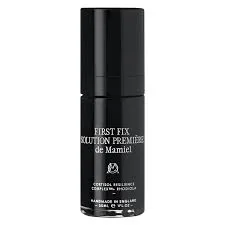
De Mamiel
First Fix - Healthy Skin Hero
uncategorized
Raters split
Ingredient safety
A 54-point gap between the two loudest voices.
40EU Harmonised Classification (CLP Annex VI)Government
vs94Greenlens Tolerance ScreenIndependent
050100
See why, ingredient by ingredientEvery rater, every axis
Ingredient safety
54 pts apartA government authority. Auto-linked to this product, not yet human-reviewed. Checked this week. about this rater →
Independent — not funded by the brands it rates. Auto-linked to this product, not yet human-reviewed. Checked this week. about this rater →
A government authority. Auto-linked to this product, not yet human-reviewed. Checked this week. about this rater →
Independent — not funded by the brands it rates. Auto-linked to this product, not yet human-reviewed. Checked this week. about this rater →
Independent — not funded by the brands it rates. Auto-linked to this product, not yet human-reviewed. Checked this week. about this rater →
A government authority. Auto-linked to this product, not yet human-reviewed. Checked this week. about this rater →
Also screened, nothing found: California Proposition 65 · IARC Monographs · US NTP Report on Carcinogens · ECHA SVHC Candidate List
Environmental
Also screened, nothing found: EU Microplastics Restriction
Coverage & match quality
6 ratings · 1 of 4 axes
- Some ratings rest on an automatic match that has not been human-reviewed.
- Fewer raters reach smaller-brand products, so a missing rating is not a clean bill of health, only a gap.
Weighted by what you care about
Tune your weights
composite recomputes live
+
1.0×
Environmentalno rating
No rater covers this axis for this product, so its weight can't move the score.
Laborno rating
No rater covers this axis for this product, so its weight can't move the score.
Packagingno rating
No rater covers this axis for this product, so its weight can't move the score.
0 means ignored. Higher = more weight in your composite.
Ingredients, decoded
Data availability
Robust45 of 48 characterized
Our sources have reference data on 45 of 48 listed ingredients; 3 are uncharacterized in our data — a gap, not a clean bill.
Worth a look (9)
ANSES endocrine candidateflagged by 3 of 9 lists
EU harmonised skin sensitizerflagged by 2 of 9 lists
EU harmonised CMR (cat. 2)flagged by 4 of 9 lists
Undisclosed fragrance blendflagged by 2 of 9 lists
EU harmonised skin sensitizerflagged by 2 of 9 lists
ANSES endocrine candidateflagged by 2 of 9 lists
EU harmonised skin sensitizerflagged by 2 of 9 lists
EU-regulated fragrance allergenflagged by 1 of 9 lists
Health Canada Hotlist — restrictedflagged by 1 of 9 lists
No flags in our sources (36)
- Aqua/Water/Eau
- Glycerinhumectant
- Propanediol
- Camellia Japonica seed oil
- Kappaphycus alvarezii extract
- Caryodendron orinocense nut oil
- Ectoin
- Opuntia ficus indica seed oil
- Squalane
- Helianthus annuus seed oil
- Diheptyl succinate
- Capryloyl Glycerin/Sebacic Acid Copolymer
- Passiflora edulis seed oil
- Punica granatum seed oil
- Cetearyl alcohol
- Cetyl phosphate
- Curcuma longa Callus Lysate
- Lespedeza capitata leaf/stem extract
- Sodium hyaluronatehumectant
- Maltodextrin
- Lysolecithin
- Sclerotium Gum
- Tocopherol
- Vaccinium angustifolium Fruit Extract
- Xanthan Gum
- Tephrosia purpurea seed extract
- Rhodiola Rosea root extract
- Vetiveria zizanoides root oil
- Hippophae rhamnoides kernel extract
- Pullulan
- Simmondsia chinensis seed oil
- Sorbic acid
- Rosmarinus Officinalis Leaf Extract
- Sodium Benzoate
- Hydrolyzed Soy Protein
- Hydrolyzed Yeast Protein
No data in our sources (3)
Not a verdict — our authorities simply have no reference for these.
What these ingredient tags mean (4)
These describe what an ingredient is, not whether it is a problem. The stance marks above are the ratings; these are not.
fragrance materialBenzyl alcohol, Linalool, Citronellol, Geraniol, Citral
- Benzyl alcohol: Used both as a fragrance component and as a preservative; the EU names it either way. EU Regulation (EC) 1223/2009, Annex III entry 45: a fragrance substance whose presence must be indicated in the list of ingredients above 0,001% in leave-on and 0,01% in rinse-off products, because of established contact-allergy risk. That entry carries transition footnote (38), which is footnote (37) plus a condition: stock that does not comply may still be made available until 31 July 2028 only "provided that they comply with the restrictions applicable on 15 August 2023", and only if it was lawfully placed on the Union market before the 31 July 2026 cut-off. Entry 45 covers its non-preservative use; it is separately an allowed preservative at Annex V entry 34.
- Linalool: A floral fragrance component named separately on the label. EU Regulation (EC) 1223/2009, Annex III entry 84: a fragrance substance whose presence must be indicated in the list of ingredients above 0,001% in leave-on and 0,01% in rinse-off products, because of established contact-allergy risk.
- Citronellol: A rose-and-citrus fragrance component named separately on the label. EU Regulation (EC) 1223/2009, Annex III entry 86: a fragrance substance whose presence must be indicated in the list of ingredients above 0,001% in leave-on and 0,01% in rinse-off products, because of established contact-allergy risk.
- Geraniol: A rose-scented fragrance component named separately on the label. EU Regulation (EC) 1223/2009, Annex III entry 78: a fragrance substance whose presence must be indicated in the list of ingredients above 0,001% in leave-on and 0,01% in rinse-off products, because of established contact-allergy risk.
- Citral: A lemon-scented fragrance component named separately on the label; the one name covers three related substances. EU Regulation (EC) 1223/2009, Annex III entry 70: a fragrance substance whose presence must be indicated in the list of ingredients above 0,001% in leave-on and 0,01% in rinse-off products, because of established contact-allergy risk. As replaced by Commission Regulation (EU) 2026/909 of 27 April 2026, the entry is a GROUPED one covering citral, geranial and neral, declared collectively as "Citral", with per-product-type caps from 0,032% in deodorant to 1,2% in rinse-off and leave-on hair products. Its three substances carry two different sell-through dates: products not complying may not be placed on the Union market from 1 January 2027 in every case, and may not be made available from 1 July 2028 for citral, footnote (**), or from 1 August 2028 for geranial and neral, footnote (***). In the consolidated text those two footnotes are renumbered (46) and (47); both are worded "these substances", where the footnotes that attach to a single named substance say "that substance".
undeclared fragrance blendParfum
- Parfum: A blend the label does not itemize, so what is in it cannot be read from the ingredient list. EU Regulation (EC) 1223/2009 permits the collective term "parfum"; the SCCS Opinion on Fragrance Allergens (SCCS/1459/11) reviews the contact-allergy evidence for the substances it can contain.
exfoliating acidSalicylic acid
- Salicylic acid: A beta hydroxy acid that clears the inside of pores; the EU restricts its level and keeps it off children under three. SCCS Opinion on Salicylic Acid, Submission I (SCCS/1601/18, corrigendum of 20 to 21 June 2019); EU Regulation (EC) 1223/2009 Annex III entry 98, as amended by Commission Regulation (EU) 2021/850, which for purposes other than preservation caps it at 3,0% in rinse-off hair products, 2,0% in other products, and 0,5% in body lotion, eye shadow, mascara, eyeliner, lipstick and roll-on deodorant, and states "Not to be used in preparations for children under 3 years of age." Its separate PRESERVATIVE use sits at Annex V entry 3, capped at 0,5% (acid), where the salts carry the carve-out "except for shampoos".
humectantGlycerin, Sodium hyaluronate
- Glycerin: A humectant, and one of the two ingredients a comparison of moisturiser components found made a significant difference to skin hydration. FDA OTC skin protectant monograph, 21 CFR 347.10(h), lists glycerin as a skin protectant at 20 to 45%. On the humectant half: Jeong CB, Han JY, Cho JC, Suh KD, Nam GW, "Analysis of electrical property changes of skin by oil-in-water emulsion components", Int J Cosmet Sci 2013;35(4):402-410, DOI 10.1111/ics.12059, PMID 23621673, found that "glycerine and urea showed significant skin hydration effects compared with other humectants".
- Sodium hyaluronate: A humectant that holds a large amount of water at the skin surface. Chylińska N, Maciejczyk M, "Hyaluronic Acid and Skin: Its Role in Aging and Wound-Healing Processes", Gels 2025;11(4):281, DOI 10.3390/gels11040281, PMID 40277717, open access: hyaluronic acid's "high osmotic activity and anionic structure enable it to bind large amounts of water", and "sodium and potassium hyaluronate are widely used in moisturizing products". The same review notes that high-molecular-weight hyaluronic acid does not penetrate the deeper layers.