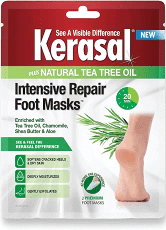
Kerasal
Intensive Repair Foot Masks
uncategorized
Cleaner pick · Safest moisturize we have rated
Africology Skincare & Spa
Bio Therapy Body Lotion+12 on ingredient safety
250ml · 78 ZAR · 31.20 ZAR/100 ml
Ingredient safetyRaters agree
Ranked by safety only. Greenlens earns from qualifying purchases. Payout never affects a rating, a ranking, or the cleaner pick.
All 1060 cleaner options, safest first We show the best 12, including the strongest on each axis.
Every rater, every axis
Ingredient safety
raters agreeA government authority. Auto-linked to this product, not yet human-reviewed. Checked this week. about this rater →
Independent — not funded by the brands it rates. Auto-linked to this product, not yet human-reviewed. Checked this week. about this rater →
Independent — not funded by the brands it rates. Auto-linked to this product, not yet human-reviewed. Checked this week. about this rater →
A government authority. Auto-linked to this product, not yet human-reviewed. Checked this week. about this rater →
A government authority. Auto-linked to this product, not yet human-reviewed. Checked this week. about this rater →
Independent — not funded by the brands it rates. Auto-linked to this product, not yet human-reviewed. Checked this week. about this rater →
Also screened, nothing found: ANSES Endocrine Disruptors · California Proposition 65 · US NTP Report on Carcinogens · ECHA SVHC Candidate List
Recognized on a safer-ingredients list: US EPA Safer Choice recognizes 59% of ingredients as safer choices — a marker, never a score.
Environmental
Also screened, nothing found: EU Microplastics Restriction
Coverage & match quality
6 ratings · 1 of 4 axes
- Some ratings rest on an automatic match that has not been human-reviewed.
- Fewer raters reach smaller-brand products, so a missing rating is not a clean bill of health, only a gap.
Weighted by what you care about
Tune your weights
composite recomputes live
+
1.0×
Environmentalno rating
No rater covers this axis for this product, so its weight can't move the score.
Laborno rating
No rater covers this axis for this product, so its weight can't move the score.
Packagingno rating
No rater covers this axis for this product, so its weight can't move the score.
0 means ignored. Higher = more weight in your composite.
Ingredients, decoded
Data availability
Robust36 of 37 characterized
Our sources have reference data on 36 of 37 listed ingredients; 1 is uncharacterized in our data — a gap, not a clean bill.
Worth a look (3)
EU harmonised CMR (cat. 2)flagged by 4 of 9 lists →
- MELALEUCA ALTERNIFOLIA LEAF OILcommon irritantfragrance materialperfuming · antioxidantraters disagree
Mild sensitizer for someflagged by 1 of 9 lists →
IARC possible carcinogen (Group 2B)flagged by 1 of 9 lists →
No flags in our sources (33)
- WATER
- BUTYROSPERMUM PARKII BUTTER
- PALMITIC ACID
- GLYCERINhumectant
- STEARIC ACID
- DICAPRYLYL CARBONATE
- BETAINE
- METHYLPROPANEDIOL
- CETEARYL ALCOHOL
- CETEARYL GLUCOSIDE
- 1,2-HEXANEDIOL
- HYDROXYACETOPHENONE
- UREAhumectant
- CETYL ALCOHOL
- GLYCERYL STEARATE
- PEG-75 STEARATE
- SODIUM POLYACRYLATE
- SODIUM STEAROYL GLUTAMATE
- CETETH-20
- STEARETH-20
- MYRISTIC ACID
- DISODIUM EDTA
- SODIUM HYALURONATEhumectant
- TORREYA NUCIFERA SEED OIL
- XANTHAN GUM
- PROPANEDIOL
- BUTYLENE GLYCOL
- CETRARIA ISLANDICA EXTRACT
- ACMELLA OLERACEA EXTRACT
- TOCOPHEROL
- PENTYLENE GLYCOL
- CAPRYLYL GLYCOL
- ANTHEMIS NOBILIS FLOWER EXTRACT
No data in our sources (1)
Not a verdict — our authorities simply have no reference for these.
What these ingredient tags mean (3)
These describe what an ingredient is, not whether it is a problem. The stance marks above are the ratings; these are not.
common irritantMELALEUCA ALTERNIFOLIA LEAF OIL
- MELALEUCA ALTERNIFOLIA LEAF OIL: An essential oil whose oxidation products carry its sensitising potential; the EU assesses it as a moderate skin sensitiser. SCCS Scientific Opinion on Tea Tree Oil (CAS/EC 68647-73-4 / 285-377-1), SCCS/1681/25, adopted 30 October 2025, which concludes it is a moderate skin sensitiser. It does not set maximum levels of its own: it assesses the concentrations the applicant defended, and finds no concern at 2,0% in shampoo, 1,0% in shower gel, 1,0% in face wash and 0,1% in face cream, for oil conforming to ISO 4730:2017, in adults, in non-sprayable formats. It draws on the earlier SCCP opinions SCCP/1155/08 and SCCP/0843/04 and incorporates their data by reference; it says nothing about their status.
exfoliating acidSALICYLIC ACID
- SALICYLIC ACID: A beta hydroxy acid that clears the inside of pores; the EU restricts its level and keeps it off children under three. SCCS Opinion on Salicylic Acid, Submission I (SCCS/1601/18, corrigendum of 20 to 21 June 2019); EU Regulation (EC) 1223/2009 Annex III entry 98, as amended by Commission Regulation (EU) 2021/850, which for purposes other than preservation caps it at 3,0% in rinse-off hair products, 2,0% in other products, and 0,5% in body lotion, eye shadow, mascara, eyeliner, lipstick and roll-on deodorant, and states "Not to be used in preparations for children under 3 years of age." Its separate PRESERVATIVE use sits at Annex V entry 3, capped at 0,5% (acid), where the salts carry the carve-out "except for shampoos".
humectantGLYCERIN, UREA, SODIUM HYALURONATE
- GLYCERIN: A humectant, and one of the two ingredients a comparison of moisturiser components found made a significant difference to skin hydration. FDA OTC skin protectant monograph, 21 CFR 347.10(h), lists glycerin as a skin protectant at 20 to 45%. On the humectant half: Jeong CB, Han JY, Cho JC, Suh KD, Nam GW, "Analysis of electrical property changes of skin by oil-in-water emulsion components", Int J Cosmet Sci 2013;35(4):402-410, DOI 10.1111/ics.12059, PMID 23621673, found that "glycerine and urea showed significant skin hydration effects compared with other humectants".
- UREA: A humectant the skin already makes; at higher levels it also softens thickened skin. StatPearls, "Moisturizers", NCBI Bookshelf NBK545171, updated 12 February 2024: "Urea is a component of NMF. The addition of urea to moisturizers helps with the absorption of water into the stratum corneum." The FDA label for prescription-strength urea calls it keratolytic and states that its mechanism of action is not yet known.
- SODIUM HYALURONATE: A humectant that holds a large amount of water at the skin surface. Chylińska N, Maciejczyk M, "Hyaluronic Acid and Skin: Its Role in Aging and Wound-Healing Processes", Gels 2025;11(4):281, DOI 10.3390/gels11040281, PMID 40277717, open access: hyaluronic acid's "high osmotic activity and anionic structure enable it to bind large amounts of water", and "sodium and potassium hyaluronate are widely used in moisturizing products". The same review notes that high-molecular-weight hyaluronic acid does not penetrate the deeper layers.