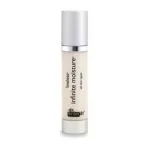
Dr. Brandt
Lineless Infinite Moisture
Anti-Aging

Cleaner pick · Safest treatments we have rated
Iunik Global
Lime Moisture Mild Peeling Gel+73 on ingredient safety
$14
Ingredient safetyRaters agree
Ranked by safety only. Greenlens earns from qualifying purchases. Payout never affects a rating, a ranking, or the cleaner pick.
Raters split
Ingredient safety
A 90-point gap between the two loudest voices.
0Greenlens Precautionary ScreenIndependent
vs90EU Harmonised Classification (CLP Annex VI)Government
050100
See why, ingredient by ingredientAll 2052 cleaner options, safest first We show the best 12, including the strongest on each axis.
Every rater, every axis
Ingredient safety
90 pts apartIndependent — not funded by the brands it rates. Auto-linked to this product, not yet human-reviewed. Checked this week. about this rater →
Independent — not funded by the brands it rates. Auto-linked to this product, not yet human-reviewed. Checked this week. about this rater →
A government authority. Auto-linked to this product, not yet human-reviewed. Checked this week. about this rater →
A government authority. Auto-linked to this product, not yet human-reviewed. Checked this week. about this rater →
Independent — not funded by the brands it rates. Auto-linked to this product, not yet human-reviewed. Checked this week. about this rater →
Also screened, nothing found: US NTP Report on Carcinogens · ECHA SVHC Candidate List · Health Canada Ingredient Hotlist · California Proposition 65 · IARC Monographs
Environmental
A government authority. Auto-linked to this product, not yet human-reviewed. Checked this week. about this rater →
Coverage & match quality
6 ratings · 2 of 4 axes
- Some ratings rest on an automatic match that has not been human-reviewed.
- Fewer raters reach smaller-brand products, so a missing rating is not a clean bill of health, only a gap.
Weighted by what you care about
Tune your weights
composite recomputes live
+
1.0×
1.0×
Laborno rating
No rater covers this axis for this product, so its weight can't move the score.
Packagingno rating
No rater covers this axis for this product, so its weight can't move the score.
0 means ignored. Higher = more weight in your composite.
Ingredients, decoded
Data availability
Robust25 of 28 characterized
Our sources have reference data on 25 of 28 listed ingredients; 3 are uncharacterized in our data — a gap, not a clean bill.
Worth a look (8)
ANSES CMR-listedflagged by 3 of 9 lists →
Carcinogen-linkedflagged by 1 of 9 lists →
Carcinogen-linkedflagged by 1 of 9 lists →
Endocrine-activeflagged by 3 of 9 lists →
Endocrine-activeflagged by 4 of 9 lists →
EU harmonised skin sensitizerflagged by 1 of 9 lists →
EU-regulated fragrance allergenflagged by 1 of 9 lists →
EU microplastics-restrictedflagged by 1 of 9 lists →
No flags in our sources (17)
- Water
- C12 15 Alkyl Ethylhexanoate
- Butylene Glycol
- Ahnfeltia Concinna Extract
- Sodium Hyaluronatehumectant
- Glyceryl Polymethacrylate
- Palmitoyl Oligopeptide
- Sericin
- Glycerinhumectant
- DEA Cetyl Phosphate
- Cola Acuminata Seed Extract
- Ilex Paraguariensis Leaf Extract
- Tocopheryl Acetate
- Geranium Maculatum Oil
- Sorbitan Stearate
- Phenyltrimethicone
- Tetrasodium EDTA
No data in our sources (3)
Not a verdict — our authorities simply have no reference for these.
What these ingredient tags mean (2)
These describe what an ingredient is, not whether it is a problem. The stance marks above are the ratings; these are not.
common irritantDMDM Hydantoin, Diazolidinyl Urea
- DMDM Hydantoin: A preservative the FDA lists as a formaldehyde releaser, which is why formaldehyde-reactive skin can notice it. How much reaches the skin depends on the whole formula, not on this name alone. EU Regulation (EC) 1223/2009, Annex V entry 33, permits DMDM hydantoin as a preservative up to 0,6%. The FDA names it among the "formaldehyde and formaldehyde releasing ingredients" on its Allergens in Cosmetics page (content current 25 February 2022). SCCS Scientific Advice SCCS/1632/21, on the threshold for the "contains formaldehyde" warning, describes a study in which a moisturiser spiked to the 0,6% Annex V maximum released at least 40 ppm formaldehyde. Annex V preamble point 2, as amended by Commission Regulation (EU) 2022/1181, requires the warning "releases formaldehyde" on any product whose total released formaldehyde exceeds 0,001% (10 ppm). That Regulation states the sensitisation ground itself, so the chain is drawn by the regulator and not by us: recital (2) names the class, "Certain of those preservatives are gradually releasing formaldehyde in order to fulfil a preserving function in the final cosmetic product (so called formaldehyde releasers)", and recital (3) gives the purpose of the warning, "In order to inform consumers sensitised to formaldehyde about the presence of formaldehyde that may trigger an allergic reaction". Recital (1) records that formaldehyde is classified a skin sensitizer (Category 1) in Part 3 of Annex VI to Regulation (EC) 1272/2008.
- Diazolidinyl Urea: A preservative the FDA lists as a formaldehyde releaser, so formaldehyde-reactive skin can notice it. How much reaches the skin depends on the whole formula, not on this name alone. EU Regulation (EC) 1223/2009, Annex V entry 46, permits diazolidinyl urea as a preservative up to 0,5%. The FDA names it among the "formaldehyde and formaldehyde releasing ingredients" on its Allergens in Cosmetics page (content current 25 February 2022). Annex V preamble point 2, as amended by Commission Regulation (EU) 2022/1181, requires the warning "releases formaldehyde" on any product whose total released formaldehyde exceeds 0,001% (10 ppm). That Regulation states the sensitisation ground itself, so the chain is drawn by the regulator and not by us: recital (2) names the class, "Certain of those preservatives are gradually releasing formaldehyde in order to fulfil a preserving function in the final cosmetic product (so called formaldehyde releasers)", and recital (3) gives the purpose of the warning, "In order to inform consumers sensitised to formaldehyde about the presence of formaldehyde that may trigger an allergic reaction". Recital (1) records that formaldehyde is classified a skin sensitizer (Category 1) in Part 3 of Annex VI to Regulation (EC) 1272/2008.
humectantSodium Hyaluronate, Glycerin
- Sodium Hyaluronate: A humectant that holds a large amount of water at the skin surface. Chylińska N, Maciejczyk M, "Hyaluronic Acid and Skin: Its Role in Aging and Wound-Healing Processes", Gels 2025;11(4):281, DOI 10.3390/gels11040281, PMID 40277717, open access: hyaluronic acid's "high osmotic activity and anionic structure enable it to bind large amounts of water", and "sodium and potassium hyaluronate are widely used in moisturizing products". The same review notes that high-molecular-weight hyaluronic acid does not penetrate the deeper layers.
- Glycerin: A humectant, and one of the two ingredients a comparison of moisturiser components found made a significant difference to skin hydration. FDA OTC skin protectant monograph, 21 CFR 347.10(h), lists glycerin as a skin protectant at 20 to 45%. On the humectant half: Jeong CB, Han JY, Cho JC, Suh KD, Nam GW, "Analysis of electrical property changes of skin by oil-in-water emulsion components", Int J Cosmet Sci 2013;35(4):402-410, DOI 10.1111/ics.12059, PMID 23621673, found that "glycerine and urea showed significant skin hydration effects compared with other humectants".