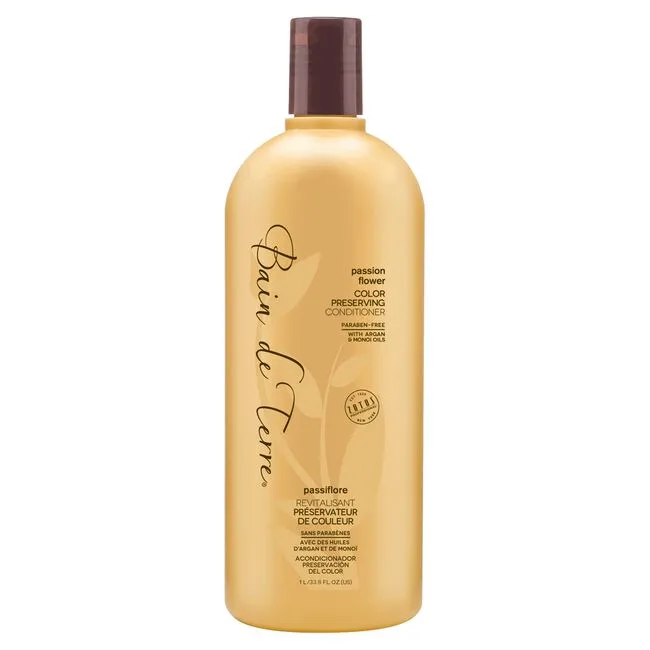
Bain De Terre
Color Preserving Conditioner, Passion Flower
Conditioner
Every rater, every axis
Ingredient safety
Finding shown, score not counted — partial label
- ECHA SVHC Candidate List flagged an ingredient
- Health Canada Ingredient Hotlist flagged an ingredient
- EU Harmonised Classification (CLP Annex VI) flagged an ingredient
This finding stands: the ingredient it names really is on the list we hold. Its 0-100 score does not count toward the pillar, because we only hold part of this label, and a partial list can only ever score too generously.
Also screened, nothing found: IARC Monographs · California Proposition 65 · US NTP Report on Carcinogens · ANSES Endocrine Disruptors
Environmental
Also screened, nothing found: EU Microplastics Restriction
Weighted by what you care about
Tune your weights
composite recomputes live
+
Ingredient safetyno rating
No rater covers this axis for this product, so its weight can't move the score.
Environmentalno rating
No rater covers this axis for this product, so its weight can't move the score.
Laborno rating
No rater covers this axis for this product, so its weight can't move the score.
Packagingno rating
No rater covers this axis for this product, so its weight can't move the score.
0 means ignored. Higher = more weight in your composite.
Ingredients, decoded
Data availability
Partial list31 shown
Only part of this product's ingredient list could be read from its source, so what is shown here is incomplete. We do not publish a safety score from a partial list.
Worth a look (10)
Carcinogen-linkedflagged by 1 of 9 lists →
Strong contact sensitizerflagged by 3 of 9 lists →
Strong contact sensitizerflagged by 2 of 9 lists →
Undisclosed fragrance blendflagged by 2 of 9 lists →
Persistent / bioaccumulativeflagged by 1 of 9 lists →
EU-restricted (with limits)flagged by 2 of 9 lists →
Health Canada Hotlist — restrictedflagged by 1 of 9 lists →
EU-restricted (with limits)flagged by 2 of 9 lists →
EU-restricted (with limits)flagged by 2 of 9 lists →
EU-restricted (with limits)flagged by 2 of 9 lists →
No flags in our sources (21)
- Water/Aqua/Eau
- Cetyl Alcohol
- Dimethiconerich occlusive
- Hydrolyzed Soy Protein
- Ribes Nigrum Fruit Extract
- Lycium Barbarum Fruit Extract
- Cocos Nucifera Oil
- Argania Spinosa Kernel Oil
- Passiflora Incarnata Flower Extract
- Gardenia Tahitensis Flower Extract
- Cetyl Ethylhexanoate
- Isopropyl Alcoholcommonly drying
- Glycerinhumectant
- Butyl Methoxydibenzoylmethane
- Poloxamer 184
- Amodimethicone
- Tetrasodium EDTA
- Benzophenone-4
- C11-15 Pareth-7
- Trideceth-12
- Polysorbate 20
What these ingredient tags mean (5)
These describe what an ingredient is, not whether it is a problem. The stance marks above are the ratings; these are not.
commonly dryingIsopropyl Alcohol
- Isopropyl Alcohol: A fast-evaporating solvent with a drying finish, common in toners and hand products. International Chemical Safety Card ICSC 0554, Isopropyl alcohol, prepared by an international group of experts for the ILO and WHO: "Repeated or prolonged contact with skin may cause dryness and cracking." It describes a stronger exposure than a cosmetic formula.
common irritantMethylchloroisothiazolinone, Methylisothiazolinone, DMDM Hydantoin
- Methylchloroisothiazolinone: A preservative restricted to rinse-off products in the EU because of contact-allergy reports. EU Regulation (EC) 1223/2009, Annex V entry 39 (rinse-off only, 0,0015% of a 3:1 mixture with methylisothiazolinone). The reason is in Commission Regulation (EU) No 1003/2014, recital 3, quoted rather than summarised: "The SCCS concluded that the mixture of Methylchloroisothiazolinone (and) Methylisothiazolinone in a ratio of 3:1 does not pose a risk to the health of the consumer when used as a preservative up to a maximum authorised concentration of 0,0015 % in rinse-off cosmetic products, apart from its skin sensitising potential. The SCCS indicated that induction and elicitation would be less likely in a rinse-off product than when the same concentration is present in a leave-on product." SCCS/1238/09 concludes it "is well recognised as an important skin sensitiser at current conditions of use".
- Methylisothiazolinone: A preservative that patch-test clinics see reactions to often enough that the EU banned it from leave-on products. American Contact Dermatitis Society, Allergen of the Year 2013 (Castanedo-Tardana MP, Zug KA, Dermatitis 2013;24(1):2-6); SCCS Opinion on Methylisothiazolinone (P94), Submission II, SENSITISATION ONLY (SCCS/1521/13, revision of 27 March 2014); banned in leave-on cosmetics by Commission Regulation (EU) 2016/1198, which recites the need to address "the increased incidence of allergies induced by methylisothiazolinone".
- DMDM Hydantoin: A preservative the FDA lists as a formaldehyde releaser, which is why formaldehyde-reactive skin can notice it. How much reaches the skin depends on the whole formula, not on this name alone. EU Regulation (EC) 1223/2009, Annex V entry 33, permits DMDM hydantoin as a preservative up to 0,6%. The FDA names it among the "formaldehyde and formaldehyde releasing ingredients" on its Allergens in Cosmetics page (content current 25 February 2022). SCCS Scientific Advice SCCS/1632/21, on the threshold for the "contains formaldehyde" warning, describes a study in which a moisturiser spiked to the 0,6% Annex V maximum released at least 40 ppm formaldehyde. Annex V preamble point 2, as amended by Commission Regulation (EU) 2022/1181, requires the warning "releases formaldehyde" on any product whose total released formaldehyde exceeds 0,001% (10 ppm). That Regulation states the sensitisation ground itself, so the chain is drawn by the regulator and not by us: recital (2) names the class, "Certain of those preservatives are gradually releasing formaldehyde in order to fulfil a preserving function in the final cosmetic product (so called formaldehyde releasers)", and recital (3) gives the purpose of the warning, "In order to inform consumers sensitised to formaldehyde about the presence of formaldehyde that may trigger an allergic reaction". Recital (1) records that formaldehyde is classified a skin sensitizer (Category 1) in Part 3 of Annex VI to Regulation (EC) 1272/2008.
undeclared fragrance blendFragrance/Parfum
- Fragrance/Parfum: A blend the label does not itemize, so what is in it cannot be read from the ingredient list. EU Regulation (EC) 1223/2009 permits the collective term "parfum"; the SCCS Opinion on Fragrance Allergens (SCCS/1459/11) reviews the contact-allergy evidence for the substances it can contain.
rich occlusiveDimethicone
- Dimethicone: A silicone that forms a film on the surface of the skin without an oily feel. FDA OTC skin protectant monograph, 21 CFR 347.10(g), lists dimethicone as a skin protectant at 1 to 30%.
humectantGlycerin
- Glycerin: A humectant, and one of the two ingredients a comparison of moisturiser components found made a significant difference to skin hydration. FDA OTC skin protectant monograph, 21 CFR 347.10(h), lists glycerin as a skin protectant at 20 to 45%. On the humectant half: Jeong CB, Han JY, Cho JC, Suh KD, Nam GW, "Analysis of electrical property changes of skin by oil-in-water emulsion components", Int J Cosmet Sci 2013;35(4):402-410, DOI 10.1111/ics.12059, PMID 23621673, found that "glycerine and urea showed significant skin hydration effects compared with other humectants".