Run by a nonprofit. Auto-linked to this product, not yet human-reviewed. This rates Skyn Iceland as a company and applies to everything they make, not this product alone. Checked this week. about this rater →
Packaging
Independent — not funded by the brands it rates. Auto-linked to this product, not yet human-reviewed. Checked this week. We started showing this score on Sep 11, 2026. about this rater →
Coverage & match quality
9 ratings · 3 of 4 axes
Some ratings rest on an automatic match that has not been human-reviewed.
Fewer raters reach smaller-brand products, so a missing rating is not a clean bill of health, only a gap.
Weighted by what you care about
Tune your weights
composite recomputes live
+
1.0×
Environmentalno rating
No rater covers this axis for this product, so its weight can't move the score.
1.0×
1.0×
0 means ignored. Higher = more weight in your composite.
What we know about the packaging
Unidentified·0 of 1 identified
Nobody recorded what this pack is actually made of beyond “plastic”, so the packaging score is a stand-in for the middle of that range — not a reading of this container.
Recorded only as “plastic” — no resin code. It could be PET (#1) (widely recyclable) or PVC (#3) (hard to recycle); nothing on record says which, so it counts as 46 out of 100, the middle of that range.
This says how precisely the packaging is described, not how good it is — a fully identified material can still be a bad one.
How we know the packaging
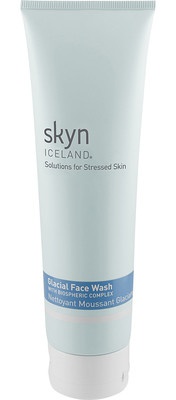
Read from the product photo, not declared by the maker — treat this score as weaker.
The container looks like this, rather than the maker saying so. A photo also cannot show the resin code moulded into the base, so every plastic container reads as “plastic, unspecified” — the cautious end of the plastics range, not a finding about this particular pack.
Ingredients, decoded
Data availability
Robust·71 of 78 characterized
Our sources have reference data on 71 of 78 listed ingredients; 7 are uncharacterized in our data — a gap, not a clean bill.
Not a verdict — our authorities simply have no reference for these.
What these ingredient tags mean (6)
These describe what an ingredient is, not whether it is a problem. The stance marks above are the ratings; these are not.
commonly dryingAlcohol
Alcohol: A fast-evaporating solvent that leaves a dry finish. International Chemical Safety Card ICSC 0044, Ethanol (anhydrous), prepared by an international group of experts for the ILO and WHO: "The substance defats the skin, which may cause dryness or cracking." Bommannan et al., as reported by Lachenmeier DW, "Safety evaluation of topical applications of ethanol on the skin and inside the oral cavity", J Occup Med Toxicol 2008;3:26, DOI 10.1186/1745-6673-3-26, open access, reference 82: "Bommannan et al. found in vivo in humans that ethanol enters the skin and removes measurable quantities of the lipid barrier material from the stratum corneum." Both describe stronger exposures than a cosmetic formula.
common irritantPropylene Glycol
Propylene Glycol: A solvent that shows up in patch-test clinics, more often as irritation than as allergy. American Contact Dermatitis Society, Allergen of the Year 2018 (Jacob SE, Scheman A, McGowan MA, Dermatitis 2018;29(1):3-5).
Butylphenyl Methylpropional: A lily-of-the-valley fragrance component the EU no longer permits in cosmetics. It was a declarable fragrance allergen at Annex III entry 83 of EU Regulation (EC) 1223/2009. Commission Regulation (EU) 2021/1902 deleted that entry and moved it to Annex II entry 1666 (2-(4-tert-butylbenzyl) propionaldehyde, CAS 80-54-6), prohibiting it in cosmetic products from 1 March 2022.
Linalool: A floral fragrance component named separately on the label.
EU Regulation (EC) 1223/2009, Annex III entry 84: a fragrance substance whose presence must be indicated in the list of ingredients above 0,001% in leave-on and 0,01% in rinse-off products, because of established contact-allergy risk.
Hydroxyisohexyl 3-Cyclohexene Carboxaldehyde: A floral fragrance component the EU no longer permits in cosmetics. It was a declarable fragrance allergen at Annex III entry 79 of EU Regulation (EC) 1223/2009. Commission Regulation (EU) 2017/1410 deleted that entry and inserted it at Annex II entry 1380 (HICC, CAS 51414-25-6 and 31906-04-4), prohibiting it in cosmetic products.
Benzyl Salicylate: A faintly floral fragrance component named separately on the label. EU Regulation (EC) 1223/2009, Annex III entry 75: a fragrance substance whose presence must be indicated in the list of ingredients above 0,001% in leave-on and 0,01% in rinse-off products, because of established contact-allergy risk. The entry was replaced by Commission Regulation (EU) 2026/909 of 27 April 2026, which caps it per product type from 0,004% in oral products to 4% in fragrance products; under its footnote (**), products not complying may not be placed on the Union market from 1 January 2027, nor made available from 1 July 2028.
Hexyl Cinnamal: A jasmine-like fragrance component named separately on the label. EU Regulation (EC) 1223/2009, Annex III entry 87: a fragrance substance whose presence must be indicated in the list of ingredients above 0,001% in leave-on and 0,01% in rinse-off products, because of established contact-allergy risk.
Geraniol: A rose-scented fragrance component named separately on the label. EU Regulation (EC) 1223/2009, Annex III entry 78: a fragrance substance whose presence must be indicated in the list of ingredients above 0,001% in leave-on and 0,01% in rinse-off products, because of established contact-allergy risk.
Limonene: A citrus-smelling fragrance component named separately on the label; the one name covers three related isomers. EU Regulation (EC) 1223/2009, Annex III entry 88: a fragrance substance whose presence must be indicated in the list of ingredients above 0,001% in leave-on and 0,01% in rinse-off products, because of established contact-allergy risk. That entry carries transition footnote (37): stock that does not comply, lawfully placed on the Union market before the 31 July 2026 cut-off, may still be made available until 31 July 2028. It is marked on the racemic dl-limonene/Dipentene line and the (S)-(l-limonene) line, but NOT the (R)-p-mentha-1,8-diene (d-limonene) line, CAS 5989-27-5, whose duty was already running as entry 88 before Commission Regulation (EU) 2023/1545 and so needed no transition. All three isomers are declared under the single glossary name "Limonene", so that name on a label does not identify which of them is present.
Citronellol: A rose-and-citrus fragrance component named separately on the label. EU Regulation (EC) 1223/2009, Annex III entry 86: a fragrance substance whose presence must be indicated in the list of ingredients above 0,001% in leave-on and 0,01% in rinse-off products, because of established contact-allergy risk.
Eugenol: A clove-scented fragrance component named separately on the label. EU Regulation (EC) 1223/2009, Annex III entry 71: a fragrance substance whose presence must be indicated in the list of ingredients above 0,001% in leave-on and 0,01% in rinse-off products, because of established contact-allergy risk.
undeclared fragrance blendFragrance
Fragrance: A blend the label does not itemize, so what is in it cannot be read from the ingredient list. EU Regulation (EC) 1223/2009 permits the collective term "parfum"; the SCCS Opinion on Fragrance Allergens (SCCS/1459/11) reviews the contact-allergy evidence for the substances it can contain.
retinoidRetinol
Retinol: A vitamin A derivative that speeds skin turnover; dryness and flaking while skin adjusts are its usual accompaniment. SCCS Opinion on Vitamin A (Retinol, Retinyl Acetate, Retinyl Palmitate), SCCS/1576/16, final version of 6 October 2016; Commission Regulation (EU) 2024/996 added the group to EU Regulation (EC) 1223/2009 Annex III entry 376, capping it at 0,05% retinol equivalent in body lotion and 0,3% in other leave-on and rinse-off products, with the label statement "Contains Vitamin A. Consider your daily intake before use."
humectantGlycerin
Glycerin: A humectant, and one of the two ingredients a comparison of moisturiser components found made a significant difference to skin hydration. FDA OTC skin protectant monograph, 21 CFR 347.10(h), lists glycerin as a skin protectant at 20 to 45%. On the humectant half: Jeong CB, Han JY, Cho JC, Suh KD, Nam GW, "Analysis of electrical property changes of skin by oil-in-water emulsion components", Int J Cosmet Sci 2013;35(4):402-410, DOI 10.1111/ics.12059, PMID 23621673, found that "glycerine and urea showed significant skin hydration effects compared with other humectants".