Renpure
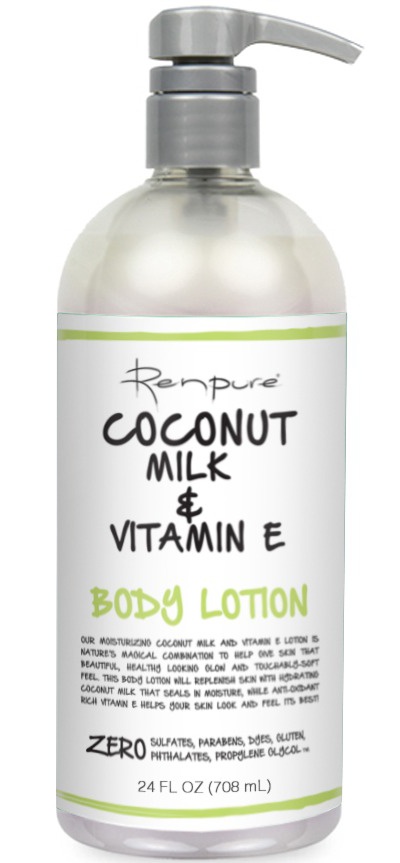
Coconut milk & vitamin E body lotion
Body LotionGTIN 0810333026581
Every rater, every axis
Ingredient safety
Environmental
Also screened, nothing found: EU Microplastics Restriction
Labor
Run by a nonprofit. Auto-linked to this product, not yet human-reviewed. This rates Renpure as a company and applies to everything they make, not this product alone. Checked this week. about this rater →
Coverage & match quality
1 rating · 1 of 4 axes
- Some ratings rest on an automatic match that has not been human-reviewed.
- Fewer raters reach smaller-brand products, so a missing rating is not a clean bill of health, only a gap.
Weighted by what you care about
Tune your weights
composite recomputes live
+
Ingredient safetyno rating
No rater covers this axis for this product, so its weight can't move the score.
Environmentalno rating
No rater covers this axis for this product, so its weight can't move the score.
1.0×
Packagingno rating
No rater covers this axis for this product, so its weight can't move the score.
0 means ignored. Higher = more weight in your composite.
Ingredients, decoded
Data availability
Not enough to score5 of 16 characterized
Our sources have reference data on 5 of 16 listed ingredients; 11 are uncharacterized in our data — a gap, not a clean bill. That is not enough of the label for a safety score to be honest, so we do not publish one.
No flags in our sources (5)
No data in our sources (11)
- dents Puried Water
- Sodlum laur
- Decl Gue Coond Of and Sugar)
- Sodium Lauroyi Lactylate
- PEG-120 Methyl Glucose eapeseed Ofl')
- Cocos Nucifera Fruit juce pey Acetate
- Guar Hydroxypropyttrimonium Chloride
- Gycol Distearate
- Gycerin ane Qatemium-17
- lodopropynyl Butylcarbamate
- Ctric Acidd ut Tisodium Ethylenediamine Disuccinate
Not a verdict — our authorities simply have no reference for these.
What these ingredient tags mean (2)
These describe what an ingredient is, not whether it is a problem. The stance marks above are the ratings; these are not.
common irritantCocamidopropyl Betaine, Diazolidinyl Urea
- Cocamidopropyl Betaine: A mild cleansing agent, but a recurring patch-test finding, usually traced to leftovers from how it is made. American Contact Dermatitis Society, Allergen of the Year 2004 (Fowler JF Jr, Dermatitis 2004;15(1):3-4).
- Diazolidinyl Urea: A preservative the FDA lists as a formaldehyde releaser, so formaldehyde-reactive skin can notice it. How much reaches the skin depends on the whole formula, not on this name alone. EU Regulation (EC) 1223/2009, Annex V entry 46, permits diazolidinyl urea as a preservative up to 0,5%. The FDA names it among the "formaldehyde and formaldehyde releasing ingredients" on its Allergens in Cosmetics page (content current 25 February 2022). Annex V preamble point 2, as amended by Commission Regulation (EU) 2022/1181, requires the warning "releases formaldehyde" on any product whose total released formaldehyde exceeds 0,001% (10 ppm). That Regulation states the sensitisation ground itself, so the chain is drawn by the regulator and not by us: recital (2) names the class, "Certain of those preservatives are gradually releasing formaldehyde in order to fulfil a preserving function in the final cosmetic product (so called formaldehyde releasers)", and recital (3) gives the purpose of the warning, "In order to inform consumers sensitised to formaldehyde about the presence of formaldehyde that may trigger an allergic reaction". Recital (1) records that formaldehyde is classified a skin sensitizer (Category 1) in Part 3 of Annex VI to Regulation (EC) 1272/2008.
undeclared fragrance blendFragrance
- Fragrance: A blend the label does not itemize, so what is in it cannot be read from the ingredient list. EU Regulation (EC) 1223/2009 permits the collective term "parfum"; the SCCS Opinion on Fragrance Allergens (SCCS/1459/11) reviews the contact-allergy evidence for the substances it can contain.
Where this came from
Cruelty-free status recorded from crueltyfree.peta.org ↗
Researched facts on Greenlens always carry the page that stated them — nothing is inferred from a model's memory.