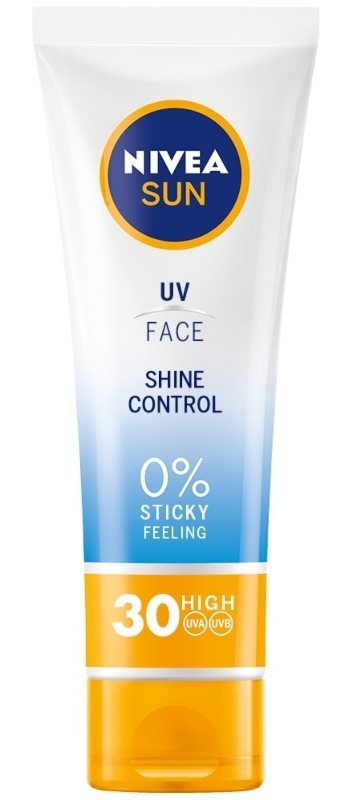
facial sunscreens50mlGTIN 4005900462121

Cleaner pick · Safest moisturizers we have rated
Iunik Global
Beta Glucan Daily Moisture Cream+62 on ingredient safety
$17
Ingredient safetyRaters agree
Ranked by safety only. Greenlens earns from qualifying purchases. Payout never affects a rating, a ranking, or the cleaner pick.
Raters split
Ingredient safety
A 74-point gap between the two loudest voices.
20ANSES Endocrine DisruptorsGovernment
vs94Greenlens Tolerance ScreenIndependent
050100
See why, ingredient by ingredientAll 5343 cleaner options, safest first We show the best 12, including the strongest on each axis.
Every rater, every axis
Ingredient safety
74 pts apartIndependent — not funded by the brands it rates. Auto-linked to this product, not yet human-reviewed. Checked this week. about this rater →
A government authority. Auto-linked to this product, not yet human-reviewed. Checked this week. about this rater →
Independent — not funded by the brands it rates. Auto-linked to this product, not yet human-reviewed. Checked this week. about this rater →
A government authority. Auto-linked to this product, not yet human-reviewed. Checked this week. about this rater →
Independent — not funded by the brands it rates. Auto-linked to this product, not yet human-reviewed. Checked this week. about this rater →
Also screened, nothing found: Health Canada Ingredient Hotlist · ECHA SVHC Candidate List · US NTP Report on Carcinogens · California Proposition 65 · IARC Monographs
Environmental
A government authority. Auto-linked to this product, not yet human-reviewed. Checked this week. about this rater →
Labor
Run by a nonprofit. Auto-linked to this product, not yet human-reviewed. This rates NIVEA as a company and applies to everything they make, not this product alone. Checked this week. about this rater →
Packaging
Independent — not funded by the brands it rates. Auto-linked to this product, not yet human-reviewed. Checked this week. about this rater →
Coverage & match quality
8 ratings · 4 of 4 axes
- Some ratings rest on an automatic match that has not been human-reviewed.
Weighted by what you care about
Tune your weights
composite recomputes live
+
1.0×
1.0×
1.0×
1.0×
0 means ignored. Higher = more weight in your composite.
What we know about the packaging
Unidentified0 of 1 identified
Nobody recorded what this pack is actually made of beyond “plastic”, so the packaging score is a stand-in for the middle of that range — not a reading of this container.
- Recorded only as “plastic” — no resin code. It could be PET (#1) (widely recyclable) or PVC (#3) (hard to recycle); nothing on record says which, so it counts as 46 out of 100, the middle of that range.
This says how precisely the packaging is described, not how good it is — a fully identified material can still be a bad one.
How we know the packaging
Read from the product photo, not declared by the maker — treat this score as weaker.
The container looks like this, rather than the maker saying so. A photo also cannot show the resin code moulded into the base, so every plastic container reads as “plastic, unspecified” — the cautious end of the plastics range, not a finding about this particular pack.
Ingredients, decoded
Data availability
Robust37 of 37 characterized
Our sources have reference data on all 37 listed ingredients.
Worth a look (12)
ANSES endocrine candidateflagged by 3 of 9 lists →
ANSES endocrine candidateflagged by 1 of 9 lists →
EU harmonised skin sensitizerflagged by 2 of 9 lists →
EU harmonised skin sensitizerflagged by 2 of 9 lists →
EU harmonised skin sensitizerflagged by 2 of 9 lists →
ANSES endocrine candidateflagged by 2 of 9 lists →
ANSES endocrine candidateflagged by 2 of 9 lists →
Undisclosed fragrance blendflagged by 2 of 9 lists →
EU microplastics-restrictedflagged by 1 of 9 lists →
EU-restricted (with limits)flagged by 2 of 9 lists →
Mild sensitizer for someflagged by 1 of 9 lists →
EU-regulated fragrance allergenflagged by 1 of 9 lists →
No flags in our sources (25)
- Aqua
- Butyl Methoxydibenzoylmethane
- Butylene Glycol Dicaprylate/Dicaprate
- C12-15 Alkyl Benzoate
- Ethylhexyl Salicylate
- Bis-Ethylhexyloxyphenol Methoxyphenyl Triazine
- Dibutyl Adipate
- Isopropyl Palmitatecomedogenic in testing
- Phenylbenzimidazole Sulfonic Acid
- Silica
- Ethylhexyl Triazone
- Tapioca Starch
- Behenyl Alcohol
- Cetearyl Alcohol
- Methylpropanediol
- Glycerinhumectant
- Glycyrrhiza Inflata Root Extract
- Tocopheryl Acetate
- Sodium Stearoyl Glutamate
- Xanthan Gum
- Acrylates/C10-30 Alkyl Acrylate Crosspolymer
- Dimethiconerich occlusive
- Sodium Chloride
- Trisodium EDTA
- Ethylhexylglycerin
What these ingredient tags mean (6)
These describe what an ingredient is, not whether it is a problem. The stance marks above are the ratings; these are not.
commonly dryingAlcohol Denat
- Alcohol Denat: Denatured ethanol: a fast-evaporating solvent that thins a formula and leaves a dry finish. International Chemical Safety Card ICSC 0044, Ethanol (anhydrous), prepared by an international group of experts for the ILO and WHO: "The substance defats the skin, which may cause dryness or cracking." WHO Guidelines on Hand Hygiene in Health Care (2009) records depletion of the skin lipid barrier by lipid-dissolving alcohols, and also that "the lipid-dissolving effect of alcohols is inversely related to their concentration". Both describe stronger exposures than a cosmetic formula.
comedogenic in testingIsopropyl Palmitate
- Isopropyl Palmitate: A light emollient named among the pore-clogging materials in the rabbit-ear assay. Fulton JE Jr, Pay SR, Fulton JE 3rd, "Comedogenicity of current therapeutic products, cosmetics, and ingredients in the rabbit ear", J Am Acad Dermatol 1984;10(1):96-105, PMID 6229554. The openly readable abstract names this ingredient among its "ingredient offenders", in prose and without a numeric rating: "Ingredient offenders include isopropyl myristate and its analogs, such as isopropyl palmitate, isopropyl isostearate, butyl stearate, isostearyl neopentanoate, myristyl myristate..." The rabbit-ear assay rates raw ingredients and does not predict how a finished formula behaves on human skin.
fragrance materialLinalool, Limonene, Benzyl Alcohol, Alpha-Isomethyl Ionone, Geraniol, Citronellol, Coumarin
- Linalool: A floral fragrance component named separately on the label. EU Regulation (EC) 1223/2009, Annex III entry 84: a fragrance substance whose presence must be indicated in the list of ingredients above 0,001% in leave-on and 0,01% in rinse-off products, because of established contact-allergy risk.
- Limonene: A citrus-smelling fragrance component named separately on the label; the one name covers three related isomers. EU Regulation (EC) 1223/2009, Annex III entry 88: a fragrance substance whose presence must be indicated in the list of ingredients above 0,001% in leave-on and 0,01% in rinse-off products, because of established contact-allergy risk. That entry carries transition footnote (37): stock that does not comply, lawfully placed on the Union market before the 31 July 2026 cut-off, may still be made available until 31 July 2028. It is marked on the racemic dl-limonene/Dipentene line and the (S)-(l-limonene) line, but NOT the (R)-p-mentha-1,8-diene (d-limonene) line, CAS 5989-27-5, whose duty was already running as entry 88 before Commission Regulation (EU) 2023/1545 and so needed no transition. All three isomers are declared under the single glossary name "Limonene", so that name on a label does not identify which of them is present.
- Benzyl Alcohol: Used both as a fragrance component and as a preservative; the EU names it either way. EU Regulation (EC) 1223/2009, Annex III entry 45: a fragrance substance whose presence must be indicated in the list of ingredients above 0,001% in leave-on and 0,01% in rinse-off products, because of established contact-allergy risk. That entry carries transition footnote (38), which is footnote (37) plus a condition: stock that does not comply may still be made available until 31 July 2028 only "provided that they comply with the restrictions applicable on 15 August 2023", and only if it was lawfully placed on the Union market before the 31 July 2026 cut-off. Entry 45 covers its non-preservative use; it is separately an allowed preservative at Annex V entry 34.
- Alpha-Isomethyl Ionone: A powdery violet fragrance component named separately on the label. EU Regulation (EC) 1223/2009, Annex III entry 90: a fragrance substance whose presence must be indicated in the list of ingredients above 0,001% in leave-on and 0,01% in rinse-off products, because of established contact-allergy risk.
- Geraniol: A rose-scented fragrance component named separately on the label. EU Regulation (EC) 1223/2009, Annex III entry 78: a fragrance substance whose presence must be indicated in the list of ingredients above 0,001% in leave-on and 0,01% in rinse-off products, because of established contact-allergy risk.
- Citronellol: A rose-and-citrus fragrance component named separately on the label. EU Regulation (EC) 1223/2009, Annex III entry 86: a fragrance substance whose presence must be indicated in the list of ingredients above 0,001% in leave-on and 0,01% in rinse-off products, because of established contact-allergy risk.
- Coumarin: A sweet hay-scented fragrance component named separately on the label. EU Regulation (EC) 1223/2009, Annex III entry 77: a fragrance substance whose presence must be indicated in the list of ingredients above 0,001% in leave-on and 0,01% in rinse-off products, because of established contact-allergy risk.
undeclared fragrance blendParfum
- Parfum: A blend the label does not itemize, so what is in it cannot be read from the ingredient list. EU Regulation (EC) 1223/2009 permits the collective term "parfum"; the SCCS Opinion on Fragrance Allergens (SCCS/1459/11) reviews the contact-allergy evidence for the substances it can contain.
rich occlusiveDimethicone
- Dimethicone: A silicone that forms a film on the surface of the skin without an oily feel. FDA OTC skin protectant monograph, 21 CFR 347.10(g), lists dimethicone as a skin protectant at 1 to 30%.
humectantGlycerin
- Glycerin: A humectant, and one of the two ingredients a comparison of moisturiser components found made a significant difference to skin hydration. FDA OTC skin protectant monograph, 21 CFR 347.10(h), lists glycerin as a skin protectant at 20 to 45%. On the humectant half: Jeong CB, Han JY, Cho JC, Suh KD, Nam GW, "Analysis of electrical property changes of skin by oil-in-water emulsion components", Int J Cosmet Sci 2013;35(4):402-410, DOI 10.1111/ics.12059, PMID 23621673, found that "glycerine and urea showed significant skin hydration effects compared with other humectants".